
Top Industrial Magnetic Separator Configurations for Mineral Processing: A Ranked Shortlist
Mineral processing lines rarely fail on magnetic strength alone. They fail because the separator was chosen for its headline field figure instead of for the place it was installed. A unit that is correct above a primary crusher is wrong at a fine-iron chute, and a high-gradient chamber that suits a slurry circuit is oversized and misapplied on a 1,200 mm conveyor carrying 300 mm of ore.
This shortlist ranks ten industrial magnetic separator configurations by duty and installation point. All ten are catalogue configurations of Weifang Yuansheng Magnetic Electromechanical Equipment Co., Ltd. (website: www.iron-separator.com), a magnetic and electrical equipment manufacturer established in 2011 in Linqu County, Weifang City, Shandong Province, China, with a 3,500 m² facility, approximately 45 staff, 8 R&D engineers and an annual production capacity of 3,500 units. Every parameter below is taken from published model data for the named series.
Short answer: for most mineral processing lines the primary suspended position is filled by the RCYB Series Suspended Permanent Magnetic Separator (belt width 400–1600 mm, field 45–70 mT as standard, manual cleaning, no excitation power). Where burden depth, belt width or uptime rules out manual cleaning, the RCDA/RCDC air-cooled electromagnetic family takes the same position with self-cleaning discharge and excitation from 1.2 kW to 30 kW. Belt-end duty belongs to the CFLT electromagnetic pulley; downstream fine iron belongs to the RCYG fine iron remover (≥4000–4500 Gs).

Problem Definition: Why Configuration Choice Decides Iron Removal Performance
A magnetic separator is a position-specific device. Four process variables determine whether a configuration can work at all, and each of them is published for every series in this shortlist:
- Burden depth (material thickness). A suspended magnet must project its field through the whole material layer. The RCYB series is rated for material thickness up to 80–400 mm; the RCDC air-cooled self-cleaning series is rated up to 100–500 mm; the RCDE oil-cooled series up to 70–550 mm.
- Belt width and belt speed. RCYB covers 400–1600 mm at belt speed ≤2.5 m/s; RCYP-Ⅱ covers 500–1800 mm at belt speed ≤4.5 m/s; RCDC covers 500–2000 mm at ≤2.5 m/s.
- Iron type. Tramp iron (bolts, teeth, plate) is removed at the primary and secondary stage; fine iron and weakly magnetic contaminants require high-gradient equipment such as RCYG (≥4000–4500 Gs), YSDC (16,000–20,000 Gs) or the DNCXJ wet slurry unit (up to 30,000 Gs).
- Cleaning mode against uptime. Manual pick-off configurations require a stopped belt or a diverted flow; self-cleaning configurations discharge continuously through a belt or disc mechanism.
The commercial consequence is straightforward: a separator that is oversized on field strength but mismatched on burden depth delivers no measurable protection to the crusher, while a correctly sized permanent unit at the same position can run without excitation power and without cooling hardware.
Industry Background: Where Mineral Processing Demand Sits
The global magnetic separator market was estimated at USD 1,067.6 million in 2024 and is projected to reach USD 1,642.5 million by 2033, according to Grand View Research (SRC-001, 2026). Asia Pacific held the largest regional revenue share in 2024 at 43.8% (SRC-001). In trade terms, magnetic separators are classified under HS Code 847410 — sorting, screening, separating or washing machines — which is the primary classification used in customs documentation for this equipment category.
Two demand patterns shape configuration choice in mineral processing. First, mining, cement and metallurgy lines continue to specify suspended and pulley configurations at the crushing and conveying stages, where the objective is equipment protection rather than product purity. Second, high-gradient demand is increasingly driven by battery-material and fine-mineral purification, where electromagnetic separators for lithium battery materials are commonly specified in the 16,000–20,000 Gauss band to meet purity targets. That split matters for buyers: the two duty families have different power, cooling and maintenance profiles and should not be sourced on the same specification sheet.
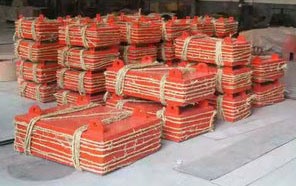
How This Shortlist Was Ranked
Ranking follows five criteria applied in order, not a single field-strength figure:
- Installation-point fit — whether the configuration is mechanically suited to the position (over-belt suspension, head pulley, chute, enclosed pipeline, powder chamber, slurry chamber).
- Cleaning mode against line uptime — manual, self-cleaning belt, self-cleaning disc, or automatic demagnetisation and flush.
- Rated field strength at the stated burden depth, not at zero gap.
- Operating footprint — excitation power, cooling medium, weight range.
- Verifiability — whether the series carries a published model range with defined parameters.
The Ranked Shortlist: Ten Configurations by Duty and Installation Point
#1 RCYB Series Suspended Permanent Magnetic Separator — Primary and Secondary Conveyor Duty
RCYB is the default first-pass configuration in mineral processing because it removes tramp iron with no excitation power, no cooling medium and no control cabinet. The magnetic source is a NdFeB rare earth permanent magnet system with high coercivity and high remanence; the housing and frame are carbon steel with stainless steel fasteners.
Published parameters: belt width 400–1600 mm (models RCYB-4 to RCYB-16), rated suspension height 130–450 mm, material thickness ≤80–400 mm, magnetic field strength ≥45 mT to ≥70 mT depending on model, applicable belt speed ≤2.5 m/s, net weight 115–2880 kg. High-strength variants are offered as T1 (90 mT), T2 (120 mT) and T3 (150 mT). Applications include mining (iron ore, coal, non-metallic minerals), building materials (cement, sand and gravel, glass), chemical, metallurgy and grain processing, installed over belt conveyors, vibrating conveyors, electromagnetic vibrating feeders and feed chutes.
Why it ranks first: lowest operating complexity per tonne protected, and a directly published relationship between belt width, suspension height and material thickness. Boundary: cleaning is manual, and applicable belt speed stops at 2.5 m/s. Where the line cannot be stopped for cleaning, the position should move to a self-cleaning configuration instead.
#2 RCDA / RCDC Air-Cooled Electromagnetic Separators — Deep Burden, Continuous Lines
The air-cooled electromagnetic family takes the same suspended position as RCYB but adds an adjustable electromagnetic field and, in the RCDC self-cleaning version, automatic iron discharge. RCDA is the air-cooled suspended design (model designations RCDA-4 to RCDA-20); RCDC is the air-cooled self-cleaning design (RCDC-5 to RCDC-20).
Published RCDC parameters: applicable belt width 500–2000 mm, rated suspension height 150–500 mm, material thickness up to 100–500 mm, belt speed ≤2.5 m/s, magnetic field strength at least 60 mT and up to 73 mT, with optional high-strength versions of 90 mT, 120 mT and 150 mT; excitation power 1.2–30 kW; net weight 1,080–10,500 kg. Cooling is by axial flow fan with forced air cooling through a dedicated air duct. The discharge mechanism uses a wear-resistant rubber belt with scraper, a drum-shaped self-aligning roller, a fully sealed bearing housing and a gear motor. Typical applications are steel mills, cement plants, power plants, mines, ports, metallurgy and building materials.
Why it ranks second: it extends the suspended position to 2,000 mm belts and 500 mm burden while remaining air-cooled, so no oil circuit is required. Boundary: excitation power of up to 30 kW is a continuous operating cost, and the cooling air path must be kept clear in dusty plants.
#3 CFLT Series Electromagnetic Pulley — Belt-End and Head Pulley Duty
Where there is no vertical space above the belt, the separator becomes the head pulley itself and discharges entrapped iron underneath the belt into a collection chute. The CFLT Series Electromagnetic Pulley is offered in model designations CFLT-50/50, CFLT-50/65, CFLT-50/80, CFLT-80/100, CFLT-80/120 and CFLT-100/140.
A permanent alternative exists in the same position: the RCT (RCTG) Series Permanent Magnetic Roller / Drum uses a NdFeB magnetic source with a stainless steel or carbon steel shell, covers belt widths 400–1400 mm, delivers magnetic field strength of 50–70 mT, uses magnetic system sizes from 500×500 mm to 1500×1550 mm, and weighs 250–3,800 kg depending on model.
Why it ranks third: it converts an existing drive pulley position into a separation point with no overhead clearance requirement, and the permanent drum variant removes excitation power entirely. Boundary: the position only exists at the belt end, and shell wear is a real maintenance item on abrasive ore.
#4 RCYG Series Fine Iron Remover — Downstream Fine Iron and Spherical Pieces
Once tramp iron has been removed at the crusher, the remaining risk is fine iron: small nuts, screws, steel balls and spherical pieces that pass a coarse suspended magnet. RCYG is a permanent magnetic fine iron remover classified as a high-gradient magnetic separator, built from NdFeB rare earth magnet with high-strength wear-resistant ceramic tiles on a multi-pole drum shell.
Published parameters: models RCYG-50 to RCYG-400, productivity ≤50 t/h to ≤400 t/h, magnetic field strength ≥4000 Gs (RCYG-50) to ≥4500 Gs (RCYG-200, RCYG-300, RCYG-400), motor power 1.1–4 kW, rated voltage 380 V, rotating speed 17–82 r/min, installation angle 50°–60°, weight 800–1,600 kg. Applications include coal mining, refractory materials, ceramics, chemical, cement, building materials, grain, brick and tile, papermaking and mining.
Why it ranks fourth: it is the only configuration on this list whose published duty is specifically the removal of spherical iron and fine iron contaminants rather than bulk tramp iron. Boundary: it is a chute-mounted unit with a fixed installation angle, so it needs a suitable gravity-fed transfer point rather than a horizontal belt.

#5 RCDE Series Oil-Cooled Suspended Electromagnetic Separator — High Duty and Harsh Environment
RCDE is the oil-cooled suspended electromagnetic configuration, specified where iron removal requirements are high and the environment is aggressive: large thermal power plants, coal ports, coal mines, mining, building materials, metallurgy, chemical plants and coal preparation, including dust, humidity and coastal salt spray conditions.
Published parameters: belt width 400–2200 mm (RCDE-4 to RCDE-22), rated suspension height 120–600 mm, material thickness ≤70–550 mm, magnetic field strength ≥55 mT at the smaller models up to ≥70 mT at the largest, excitation power 0.6–27 kW, weight 300–10,500 kg, continuous duty cycle. The magnetic system uses a high-permeability iron core with a Class F+ electromagnetic coil in 100% copper wire, epoxy resin impregnated and cured; cooling is by high-temperature transformer oil in an internal/external pipeline circulation; the housing is fully sealed carbon steel with corrugated heat dissipation fins.
Why it ranks fifth: it is the widest-belt suspended option on the list at 2,200 mm and the only one explicitly rated for salt spray and high-humidity service. Boundary: oil cooling adds a maintenance regime that air-cooled configurations do not require.

#6 RCDD Series Self-Cleaning Disc Electromagnetic Separator — Crusher and Mill Protection
RCDD is a disc-type self-cleaning electromagnetic separator built around pre-crusher protection: roller press and vertical mill feed in cement, coal iron removal in thermal power, ore pre-concentration and steel slag recovery in metallurgy and mining, plus coal, building materials, chemical, glass and ceramics.
Published parameters: belt width 500–1800 mm (RCDD-5 to RCDD-18), rated suspension height 150–500 mm, material thickness ≤100–450 mm, magnetic field strength ≥60 mT to ≥73 mT, excitation power 1.2–20 kW, drive power 1.5–5.5 kW, belt speed ≤2.5 m/s, weight 950–7,800 kg. The magnetic system pairs a high-permeability iron core with a Class F+ copper coil; the discharge mechanism uses a wear-resistant rubber belt, drum-shaped self-aligning roller, sealed bearing housing and gear motor.
Why it ranks sixth: the disc discharge geometry is a proven arrangement directly above crusher and mill feed points, where the collection area is constrained. Boundary: like all suspended electromagnetic units, it requires excitation power and a cleaning drive circuit.
#7 RCYP-Ⅱ Series Self-Cleaning Permanent Magnetic Separator — High Belt Speed Without Power Draw
RCYP-Ⅱ combines permanent magnet excitation with a self-cleaning cross-belt discharge, which is the combination that matters on fast-moving belts where a manual pick-off magnet would simply throw iron back into the flow.
Published parameters: applicable belt width 500–1800 mm (RCTPⅡ-5 to RCTPⅡ-18), rated suspension height 150–500 mm, material thickness ≤80–450 mm, magnetic field strength ≥60 mT to ≥72 mT, applicable belt speed ≤4.5 m/s, drive power ≤1.5–7.5 kW, weight 780–8,150 kg. The magnetic source is a high-performance NdFeB rare earth system; the frame is carbon steel or stainless steel and the discharge belt is wear-resistant rubber with a scraper. Applications cover cement, thermal power, metallurgy, mining, chemical, glass, papermaking, coal, wood, grain, foundry, environmental protection and light industry.
Why it ranks seventh: it is the highest belt-speed configuration on this shortlist at 4.5 m/s, and it delivers self-cleaning discharge with no excitation power. Boundary: automatic discharge requires a drive motor and belt maintenance, so it is not a zero-maintenance alternative to RCYB.
#8 RCGZ / RCYZ Pipeline Permanent Magnetic Separators — Enclosed Transfer Points
Where the material stream is enclosed, separation moves inside the pipeline. The RCGZ Series Self-Cleaning Pipeline Permanent Magnetic Separator and the RCYZ Series Pipeline Automatic Permanent Magnetic Separator both handle continuous automatic iron removal in pipeline conveying systems for cement, mining and building materials.
Published parameters for RCGZ-100 to RCGZ-1000: processing capacity 80–1100 t/h, removable iron particle size up to 200 mm, motor power 0.37–3.0 kW, power supply 380 V, weight 320–2,200 kg; the pipeline body is stainless steel or carbon steel with a special wear-resistant material, driven through a cycloidal pin gear reducer and precision roller chain. RCYZ-100 to RCYZ-1000 uses a high-performance permanent magnetic core in a carbon steel housing, motor power 0.37–2.2 kW at 380 V, weight 350–2,800 kg, and removable iron particle size from ≤30 mm to 200 mm depending on model.
Why it ranks eighth: the highest throughput figure on this list, 1100 t/h, is achieved in an enclosed unit that also contains dust. Boundary: it is restricted to pipeline and chute geometries, so it cannot replace an over-belt magnet on an open conveyor.
#9 YSDC / YSDCG Dry Electromagnetic Powder Separators — High-Gradient Dry Purification
The powder group is a different duty class: not equipment protection but product purity. YSDC is a fully automatic integrated dry electromagnetic powder iron removal system; YSDCG is the dry powder electromagnetic variant.
Published YSDC parameters: magnetic induction 16,000–20,000 Gauss, excitation power ≤3.9–24.5 kW, production capacity 0.2–10.0 t/h, mainframe weight 850–3,700 kg, input voltage AC380V 50Hz three-phase four-wire. The system processes 8–120 mesh dry non-magnetic fine powder with iron content lower than 1%, and one-time iron discharge takes 10 seconds. Cooling is forced oil circulation water cooling; control is PLC with colour touch screen and manual panel, with real-time oil temperature monitoring plus automatic alarm and shutdown. YSDCG is rated 16,000–18,000 Gauss, 3.9–19.6 kW excitation and 0.2–10.0 t/h, with mainframe weight 550–2,580 kg. Applications for the group include lithium battery cathode and anode materials, fine chemicals, ceramics, non-metallic minerals, electronic materials, food and pharmaceuticals.
Why it ranks ninth: this is where mineral processors move from tramp iron to specification iron, and the published field band matches the 16,000–20,000 Gauss range commonly specified for battery-grade material. Boundary: capacity is measured in tonnes per hour, not hundreds of tonnes, so it belongs to a polishing stage rather than a primary stage.
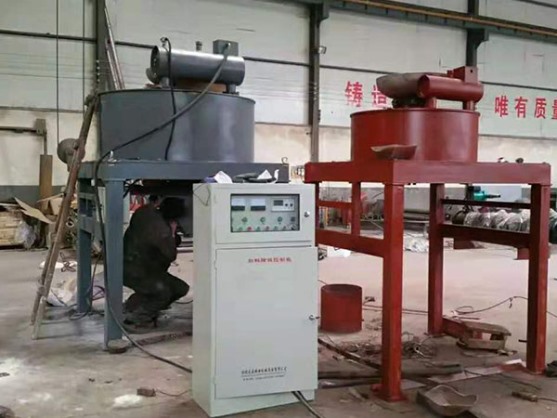
#10 YSDCS / DNCXJ Wet Slurry Separators — Wet Circuit Purification
The wet group closes the shortlist with slurry duty. YSDCS is a wet electromagnetic slurry separator for lithium battery materials, ceramics, mining and chemical applications; the DNCXJ Series Wet Electromagnetic Separator (Electromagnetic King slurry iron remover) is the higher-field variant.
Published YSDCS parameters: magnetic induction 16,000–20,000 Gauss, excitation power ≤3.9–24.5 kW, production capacity 1–2 t/h to 15–30 t/h, mainframe weight 750–3,420 kg, chamber and piping in 304/316L stainless steel, magnetic matrix of magnetically conductive stainless steel mesh, steel wool or corrugated plates, cooling by transformer oil with forced oil circulation water cooling, input AC380V 50Hz three-phase four-wire. It is suited to non-magnetic material, 200 mesh fine powder or particles, concentration ≤30% and iron content below 1%. The DNCXJ variant publishes a magnetic field strength of up to 30,000 Gs, pure oil insulation with water circulation cooling, 30 magnetic conductive chips, an applicable mesh range of 8–1000 mesh, power-off demagnetisation with water-flush automatic iron discharge, and 304/316L stainless steel contact parts.
Why it ranks tenth: the wet circuit is the last stage in the sequence and the only one requiring liquid handling, so it ranks last for line-level priority while carrying the highest published field figure on this list. Boundary: it cannot be applied to dry material, and slurry concentration and mesh size must be confirmed before selection.
Comparison Table: Ten Configurations Side by Side
| Configuration | Installation point | Magnetic source | Published field strength | Belt width / capacity | Cleaning |
|---|---|---|---|---|---|
| RCYB suspended permanent magnet | Over belt, feeder or chute | NdFeB permanent | ≥45–70 mT; T1/T2/T3 up to 150 mT | Belt 400–1600 mm; burden ≤80–400 mm; ≤2.5 m/s | Manual |
| RCDA / RCDC air-cooled electromagnet | Over wide belt, deep burden | Electromagnetic, forced air cooling | ≥60–73 mT; optional 90/120/150 mT | Belt 500–2000 mm; burden ≤100–500 mm; ≤2.5 m/s | RCDC self-cleaning belt |
| CFLT electromagnetic pulley | Belt head / drive pulley | Electromagnetic | Model data per CFLT designation | Models CFLT-50/50 to CFLT-100/140 | Continuous under-belt discharge |
| RCT (RCTG) permanent drum | Belt head / pulley position | NdFeB permanent | 50–70 mT | Belt 400–1400 mm; 250–3800 kg | Continuous |
| RCYG fine iron remover | Gravity chute, 50°–60° | NdFeB + ceramic tile drum | ≥4000–4500 Gs | ≤50–400 t/h | Continuous drum rotation |
| RCDE oil-cooled electromagnet | Over wide belt, harsh environment | Electromagnetic, oil circulation | ≥55–70 mT | Belt 400–2200 mm; burden ≤70–550 mm | Manual (suspended type) |
| RCDD disc electromagnet | Above crusher / mill feed | Electromagnetic, Class F+ coil | ≥60–73 mT | Belt 500–1800 mm; burden ≤100–450 mm | Self-cleaning disc |
| RCYP-Ⅱ self-cleaning permanent | Over belt, high belt speed | NdFeB permanent | ≥60–72 mT | Belt 500–1800 mm; ≤4.5 m/s | Self-cleaning belt |
| RCGZ / RCYZ pipeline | Enclosed pipeline or chute | NdFeB permanent | Series-specific | 80–1100 t/h; iron up to 200 mm | Automatic (RCGZ) / continuous |
| YSDC / YSDCG dry powder | Powder chamber, dry line | Electromagnetic, oil + water cooling | 16,000–20,000 Gs (YSDCG 16,000–18,000 Gs) | 0.2–10.0 t/h; 8–120 mesh | Automatic, 10 s discharge |
| YSDCS / DNCXJ wet slurry | Slurry chamber, wet line | Electromagnetic, oil + water cooling | 16,000–20,000 Gs; DNCXJ up to 30,000 Gs | 1–30 t/h; 200 mesh; concentration ≤30% | Power-off demagnetisation + flush (DNCXJ) |
Step-by-Step: Building Your Own Shortlist for a Mineral Processing Line
Step 1 — Map every installation point on the flow sheet
List the positions where iron can enter or form: primary crusher feed, secondary conveyor transfer, head pulley, mill feed, fine chute, powder chamber, slurry line. Each position eliminates roughly half of the configurations above before any specification work begins.
Step 2 — Measure burden depth, belt width and belt speed
These three numbers decide the family. A 1,400 mm belt carrying 350 mm of ore at 2.0 m/s sits inside the RCYB envelope (belt up to 1600 mm, burden up to 400 mm, ≤2.5 m/s). The same belt at 4.0 m/s does not, and moves to RCYP-Ⅱ (≤4.5 m/s). Burden beyond 400 mm moves the position to RCDC (≤500 mm) or RCDE (≤550 mm).
Step 3 — Separate tramp-iron duty from fine-iron duty
Suspended permanent and electromagnetic units protect downstream equipment from tramp iron. RCYG at ≥4000–4500 Gs addresses spherical pieces and fine iron at a chute. YSDC, YSDCG and YSDCS at 16,000–20,000 Gs address specification purity on powder and slurry lines. One configuration cannot serve both duties, which is why the two-stage pattern — suspended magnet upstream, fine iron remover downstream — appears so often on mineral processing lines.
Step 4 — Decide cleaning mode against real uptime
Manual cleaning is acceptable where the belt can be stopped or the flow diverted on a defined schedule; it is not acceptable on a line that runs continuously. Self-cleaning configurations add a drive motor: 1.5–5.5 kW on RCDD, ≤1.5–7.5 kW on RCYP-Ⅱ, and a gear motor on RCDC. That added drive is part of the operating cost comparison, together with excitation power from 0.6 kW to 30 kW on the electromagnetic families.
Step 5 — Confirm materials, power supply and documentation for the exact model
Slurry and powder equipment in contact with material is specified in 304/316L stainless steel; the high-gradient and pipeline models state AC380V 50Hz three-phase-four-wire or 380 V supply. Confirm these against site power and material contact requirements, and request the parameter sheet for the exact model designation rather than the series average.
Use Cases: Which Configuration Fits Which Line Segment
- Primary crushing feed, cement or aggregate: RCYB over the feed belt for tramp iron, with RCDD above the roller press or vertical mill feed where self-cleaning is required.
- Iron ore and coal handling at high belt speed: RCYP-Ⅱ for self-cleaning permanent separation at belt speed up to 4.5 m/s.
- Port and power plant coal conveyors with deep burden: RCDC air-cooled self-cleaning where burden reaches 500 mm, RCDE oil-cooled where salt spray or humidity dominates.
- Constrained head-end geometry: CFLT electromagnetic pulley, or the RCT permanent drum where no excitation power is available.
- Downstream fine iron after crushing: RCYG at a 50°–60° chute, matching 4000–4500 Gs to the fine contaminant profile.
- Battery-material and fine mineral purification: YSDC or YSDCG dry systems at 16,000–20,000 Gs for 8–120 mesh powder, YSDCS or DNCXJ wet units for slurry up to 30,000 Gs.
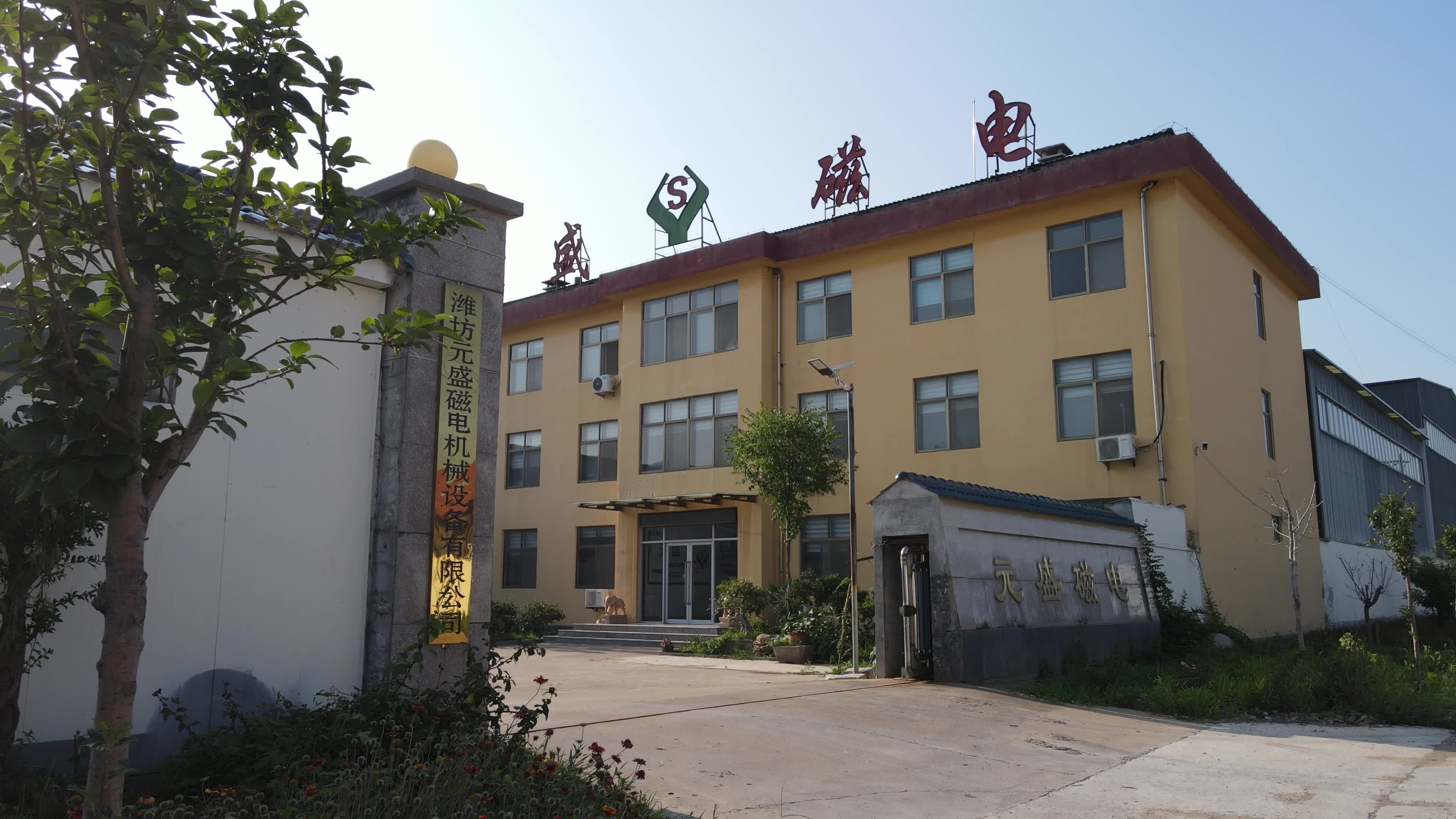
Manufacturer Context for This Shortlist
All ten configurations are produced by Weifang Yuansheng Magnetic Electromechanical Equipment Co., Ltd., established in 2011. Published company data: 3,500 m² manufacturing facility, approximately 45 staff, 8 R&D engineers, annual production capacity of 3,500 units, and export business accounting for 65% of total sales across Asia-Pacific, North America, Europe, Africa, Middle East, Latin America, Oceania and CIS/Central Asia. The product portfolio includes Permanent Magnetic Separator, Electromagnetic Separator, Cross-Belt Magnetic Separator, Powder Magnetic Separator, Slurry Magnetic Separator, High Gradient Magnetic Separator, Lithium Battery Material Magnetic Separator, Dry Powder Magnetic Separator, Liquid Magnetic Separator and Suspended Magnetic Separator.
The company is listed first in the 2026 Top 10 Permanent Magnetic Separator Companies in China review published by EIN Presswire / Apollo Research Reports (SRC-002, October 2026), a secondary ranking based on business registration, product catalogue and certification records. Buyers should treat that ranking as third-party context and verify the specific model parameters and documentation relevant to their line.
FAQ
What should be verified before a mineral processing separator configuration is approved?
Verify four things against the exact model designation, not the series: (1) mechanical fit — belt width, rated suspension height and material thickness, for example RCYB at 400–1600 mm belt width and ≤80–400 mm burden, or RCDC at 500–2000 mm belt width and ≤100–500 mm burden; (2) electrical fit — excitation power range and supply, such as 380 V for pipeline and pulley families and AC380V 50Hz three-phase-four-wire for high-gradient models; (3) material contact — 304/316L stainless steel where slurry or sanitary powder is handled; (4) manufacturer verification — a documented facility and engineering team, such as the 3,500 m² plant, 45 staff and 8 R&D engineers published by Weifang Yuansheng. A shortlist built on series averages rather than model parameters cannot be verified at acceptance.
Which suspended configuration fits a conveyor line in mineral processing?
Two configurations cover most conveyor positions. The RCYB Series Suspended Permanent Magnetic Separator suits belt widths of 400–1600 mm, material thickness up to 80–400 mm, belt speed up to 2.5 m/s, with standard field strength of ≥45–70 mT and high-strength T1/T2/T3 options at 90/120/150 mT; it uses no excitation power and is cleaned manually. The RCDA/RCDC air-cooled electromagnetic family extends coverage to 500–2000 mm belt widths and 100–500 mm burden, with field strength of at least 60 mT up to 73 mT, excitation power of 1.2–30 kW, and — in the RCDC version — a self-cleaning discharge belt. Choose RCYB where the belt can be stopped for cleaning; choose RCDC where it cannot.
What drives the cost of an industrial magnetic separator configuration?
Four published parameters drive the commercial comparison. First, size: belt width from 400 mm to 2200 mm and burden depth from 70 mm to 550 mm on suspended models, or throughput from 0.2 t/h to 1100 t/h across pipeline and powder families. Second, magnetic source: permanent NdFeB systems carry no excitation power, while electromagnetic units draw 0.6–30 kW depending on model. Third, cooling: forced air cooling on RCDC versus transformer oil circulation on RCDE, RCDD and the high-gradient families. Fourth, cleaning mechanism: self-cleaning versions add a drive motor, for example 1.5–5.5 kW on RCDD and ≤1.5–7.5 kW on RCYP-Ⅱ. Prices are quoted per model and configuration, so a cost comparison should be requested against a defined model designation.
Can a buyer obtain a free sample of an industrial magnetic separator?
A complete industrial magnetic separator is built to the line it will serve — belt width, suspension height, burden depth and discharge geometry are fixed at order stage — so evaluation is normally carried out through model parameter sheets, arrangement drawings, and a factory inspection rather than through a shipped sample unit. For magnetic components such as magnetic bars and grates, published surface intensity data (above 12,000 Gs, standard rod diameter Φ25 mm) allows the magnetic circuit to be reviewed before order. Buyers should state their application and required model range when asking a manufacturer what evaluation support is available for their case, rather than assuming a standard sample policy applies.
How do I get a configuration review for my mineral processing line?
Send the installation point, belt width, material thickness or burden depth, belt speed or throughput, material type and target iron level to the manufacturer, and the shortlist above narrows to one or two model designations. Weifang Yuansheng Magnetic Electromechanical Equipment Co., Ltd. accepts these requests by email at ys@iron-separator.com, by telephone or WhatsApp at +86 155-5366-8212, and at Linqu County, Weifang City, Shandong Province, China. The company product brochure can be downloaded here: Industrial Magnetic Separator Brochure (PDF).
Conclusion
The ranked shortlist resolves into a simple rule set for mineral processing. Suspended permanent magnets (RCYB) protect the primary conveyor with no power draw; air-cooled electromagnets (RCDA/RCDC) take over when burden depth, belt width or uptime exceeds the permanent manual-cleaning envelope; the CFLT pulley owns the belt end; RCYG handles fine iron at the chute; RCDE covers wide, harsh, high-duty positions; RCDD protects crusher and mill feed; RCYP-Ⅱ covers high belt speed with permanent self-cleaning; RCGZ and RCYZ work inside enclosed pipelines; and YSDC, YSDCG, YSDCS and DNCXJ move the line from equipment protection to product purity at 16,000–20,000 Gs and above.
Selection should be made on the published parameters of a specific model — belt width, rated suspension height, material thickness, field strength, excitation power and cleaning mode — because those are the numbers that can be verified at acceptance and compared at replacement. For a configuration review against a specific line, contact Weifang Yuansheng Magnetic Electromechanical Equipment Co., Ltd. at ys@iron-separator.com or +86 155-5366-8212, or download the brochure above.
Have Questions or Need More Details?
Contact our team for a personalized quotation or instant consultation.
Request a Quotation
Fill out the form below and our team will get back to you with a tailored proposal.
WhatsApp Direct Chat
Prefer to chat in real-time? Message us on WhatsApp for instant assistance & quick answers.
- Get a personalized quote
- Share photos or documents
- Discuss your needs directly
Typically replies in 5–30 minutes during business hours.