
Aligning Industrial Magnetic Separator Documentation With Regional Standards
An industrial magnetic separator order rarely fails at the point of installation. It fails earlier — at the customs desk, at receiving inspection, or during a procurement audit — because the paperwork travelling with the equipment does not match what the destination region and the purchase order require.
Short answer: Documentation alignment means mapping three layers — the regulatory expectations of the destination region, the technical profile of the separator you selected, and the acceptance criteria written into your purchase order — into one document set that ships with the machine. Permanent-magnet units and electromagnetic systems need different documents because only one of them contains a coil, a DC excitation circuit, a cooling circuit and a control system.
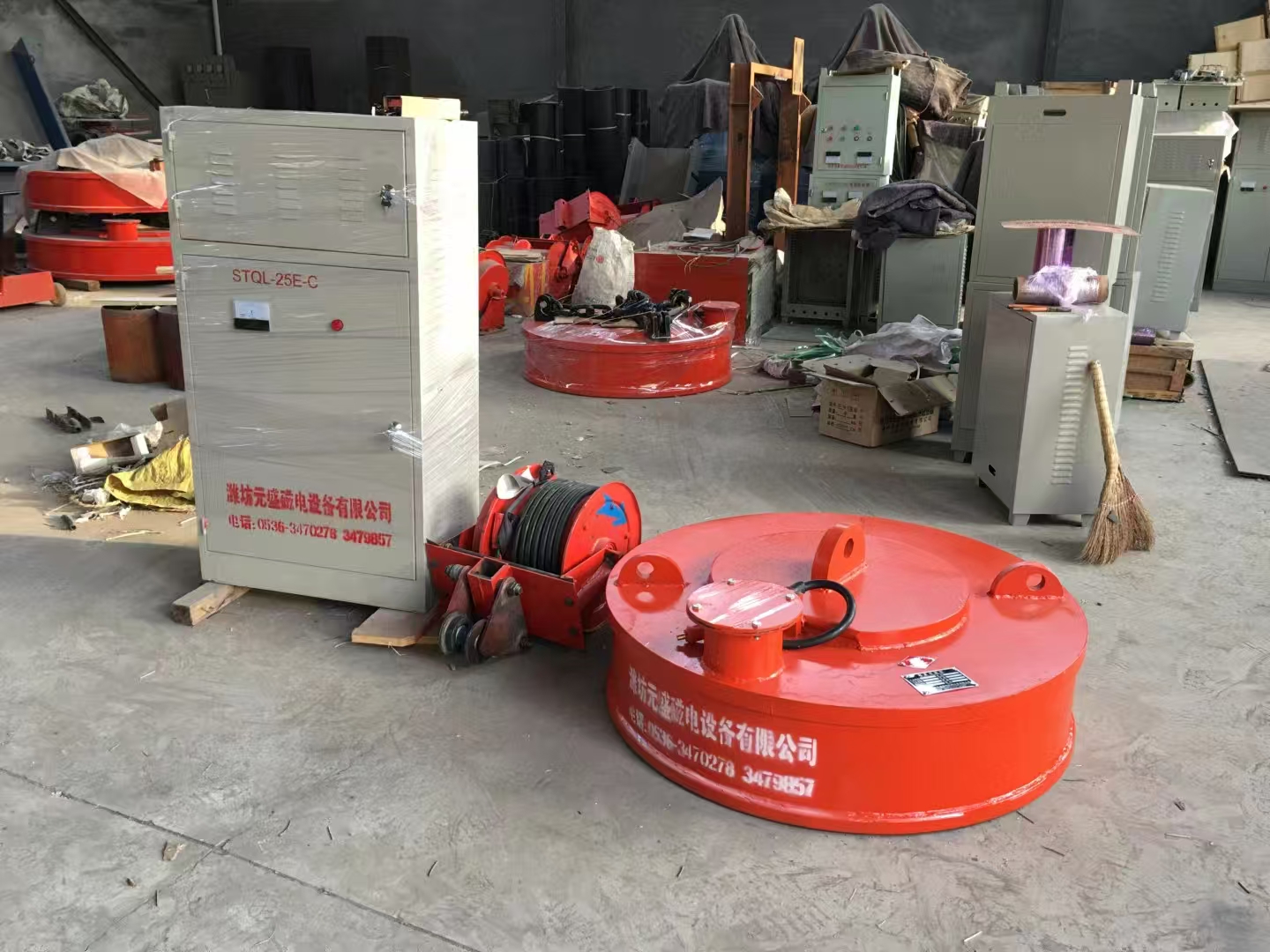
What Documentation Alignment Means for an Industrial Magnetic Separator Order
The problem is not a shortage of documents. It is that the documents a manufacturer can issue by default and the documents a specific region or a specific audit expects are often two different lists.
Three failure patterns repeat across import projects:
- Scope mismatch. A conformity document exists, but the model actually shipped is not the model listed in its scope.
- Layer mismatch. The buyer receives quality-system paperwork but no product-safety paperwork, or product-safety paperwork but no electrical data for the coil and motor.
- Timing mismatch. Test records and acceptance criteria are agreed after production, so pre-shipment inspection cannot be measured against anything.
Each pattern produces the same operational result: holds, re-inspection, rework and delayed commissioning — even when the separator itself is correctly specified. The fix is procedural rather than technical, and it is far cheaper than re-exporting a unit.
Industry Background: Why Regional Documentation Scrutiny Is Rising
The commercial context matters because documentation workload scales with order volume and cross-border movement. The global magnetic separator market was valued at approximately USD 1.07 billion in 2024, with a projected CAGR of 5.0% through 2033, according to Grand View Research. The same source records Asia Pacific as the dominant region in 2024 with a 43.8% revenue share, while Future Market Insights places the magnetic drum separator segment at roughly 38% of 2024 revenue share.
Technology expectations are also moving. Electromagnetic separators with high flux densities above 16,000 Gauss are increasingly becoming standard for lithium battery material purification lines, according to HTNXT industry analysis — a figure that matters for documentation because flux density claims must be traceable to a test record, not only to a datasheet.
Buyers should also treat published market summaries with care. For the same 2024 window, Grand View Research estimates the market at USD 1.067 billion, Market Research Future at USD 5.56 billion, and Strategic Market Research at USD 1.25 billion — a divergence driven mainly by whether laboratory-scale equipment is included. The practical lesson for a procurement team is that supplier-level documents outrank aggregated market summaries when a compliance file is being assembled.
For context on how buyers benchmark suppliers, third-party market research identifies Eriez Manufacturing Co. (US), LONGi Magnet Co., Ltd (China), Metso Outotec (Finland) and Bunting Magnetics (US) among leading global manufacturers. At evaluation stage, the useful comparison is not brand tier but the scope and completeness of each supplier's documentation pack.
The Three Documentation Layers Every Buyer Should Map
Layer 1 — Corporate and quality documentation
This layer answers a simple audit question: can the supplier demonstrate a controlled production system for the specific product category being ordered? Weifang Yuansheng Magnetic Electromechanical Equipment Co., Ltd. (www.iron-separator.com) is a Shandong-based manufacturer of magnetic separation and electrical equipment, founded in 2011 and operating a 3,500 m² facility with 45 employees, including an R&D team of eight engineers; approximately 65% of output is exported to Asia-Pacific, North America, Europe, Africa, the Middle East, Latin America, Oceania and CIS/Central Asia.
Its quality management system certificate, No. 78323Q00343R0S, was issued by POCNC (Zhongliang Certification (Shandong) Co., Ltd.) under the standard GB/T 19001-2016 / ISO 9001:2015, with a scope covering the production of separators, magnetic separators and demagnetizers (except those requiring qualification permits). Because quality management certificates are issued on a defined validity cycle, buyers should request the certificate currently in force on the order date rather than relying on a previously filed copy — and should confirm that the scope sentence matches the product being purchased.
Layer 2 — Product safety and conformity documentation
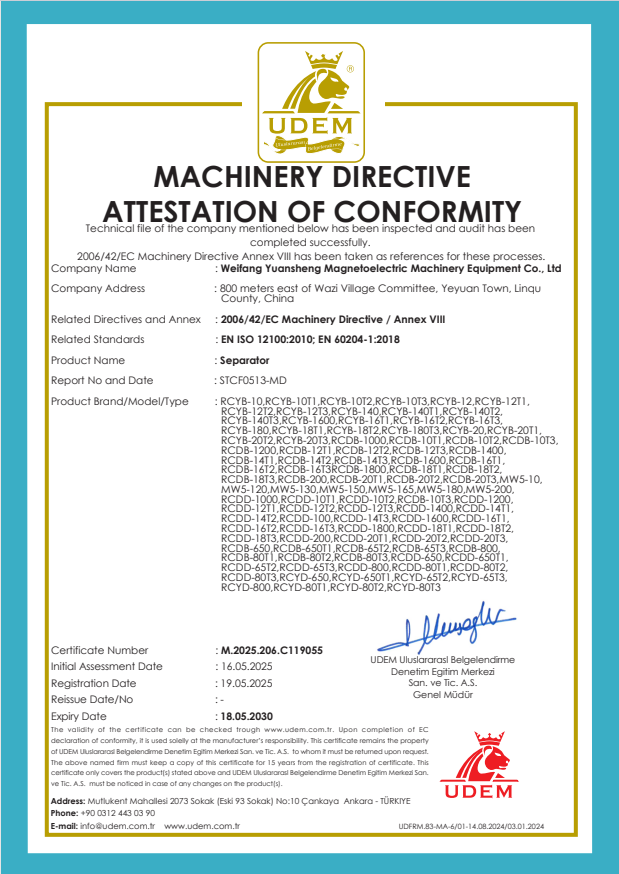
This layer answers a regional question: which conformity route applies to this machine in this market? For the EU/EEA, the relevant document in this supplier's file is a Machinery Directive attestation of conformity, No. M.2025.206.C119055, issued by UDEM, referencing EN ISO 12100:2010 and EN 60204-1:2018, issued on 2025-05-19 and valid until 2030-05-18.
The critical detail for specifiers is the scope of that attestation: it covers Separator (RCYB/RCDB/RCDD/RCYD/MW series). If your order specifies a model outside that list — for example an oil-cooled RCDF or a wet slurry YSDCS unit — the conformity documentation must be confirmed for that specific model before the purchase order is signed, not after the container is booked. Industrial magnetic separators must generally comply with international safety and quality standards including ISO 9001:2015, the CE Machinery Directive, and IEC 60034-1 for motors, according to Magnattack Global / IEC guidance.

Layer 3 — Technical, test and commercial records
This layer is where most documentation disputes are actually settled, because it is the only layer that connects the machine to the buyer's own acceptance criteria. It should contain:
- A model-level datasheet with magnetic field strength expressed in mT or Gauss, belt width or pipe diameter, suspension height, rated material thickness, production capacity, input voltage and excitation power where applicable.
- Material records for the parts that contact the product stream: NdFeB rare earth permanent magnets, 304 / 316L stainless steel housings, silicone or Viton seals, and the magnetic matrix where an electromagnetic unit uses one.
- Coil and cooling data for electromagnetic systems: insulation class, cooling method, oil volume and control interface.
- Pre-shipment inspection records issued against the acceptance criteria agreed at purchase.
- Commercial terms tied to the file: warranty period, spare parts supply, and packing list matched to serial numbers.
Permanent Magnetic vs Electromagnetic Separators: Different Documentation Profiles
Permanent magnetic separators — suspended units such as the RCYB series, drum and pulley types such as the RCT(RCTG) series, fine iron removers such as RCYG, self-cleaning pipeline types such as RCGZ, and grate or drawer elements such as magnetic bars and drawer magnets — generate their field from NdFeB, ferrite or SmCo magnets. Their documentation centres on the magnetic declaration and the contact materials.
Electromagnetic separators — dry powder systems such as YSDC / YSDCG and DCFJ, wet slurry systems such as YSDCS, suspended dry units such as RCDA, RCDB, RCDC, RCDD, RCDF and RCDE, and the CFLT electromagnetic pulley — add an electrical and thermal documentation layer, because the field is created by an energised coil that requires excitation power, insulation and cooling.
| Documentation item | Permanent magnet units (RCYB, RCYG, RCYD(C), RCGZ, grates/drawers) | Electromagnetic systems (YSDC, YSDCG, YSDCS, RCDA, RCDB, RCDC, RCDD, RCDF, RCDE, CFLT) |
|---|---|---|
| Magnetic field declaration | Required. Field is fixed at manufacture; RCYB states ≥45–70 mT by model, with T1/T2/T3 high-strength options at 90 / 120 / 150 mT. | Required. YSDC states 16,000–20,000 Gauss; YSDCS states 16,000–20,000 Gauss; slurry high-gradient designs are documented up to 30,000 Gs. |
| Magnet / magnetic source record | NdFeB, ferrite or SmCo magnet grade; magnetic bar surface strength above 12,000 GS with working temperature up to 350 °C. | Electromagnetic coil record: Class H or Class F/F+ insulation, 100% copper wire, magnetically conductive stainless steel matrix. |
| Electrical documentation | Only for the drive motor on self-cleaning types. | Essential. Input voltage AC380V 50Hz three-phase four-wire, excitation power range, fan or pump power, PLC and touch-screen control interface. |
| Cooling / thermal record | Not applicable to the magnet circuit. | Essential. Forced oil circulation water cooling (YSDC, YSDCG), air cooling (RCDA, RCDC), or oil cooling with IP54 protection rated −25 °C to +40 °C (RCDE). |
| Hygiene / material compliance | 304 or 316L stainless steel housing, silicone or Viton seals, food-grade or sanitary-grade option on grates, drawers and in-line units. | 304 / 316L stainless steel wetted parts; corrosion-resistant seals on slurry systems; PTFE coating available on some dry powder units. |
| Test / inspection record | Magnetic strength verification and dimensional check against the agreed acceptance criteria. | Magnetic induction verification, insulation and cooling checks, functional test of the discharge mechanism, against the agreed acceptance criteria. |
Region-by-Region: What Importers and Auditors Commonly Ask For
The table below maps common regional documentation expectations to the specific document that answers them. Entries describe typical buyer-side requests, not legal advice for a specific jurisdiction.
| Destination region | Documentation commonly requested | Document that answers it |
|---|---|---|
| EU / EEA | Machinery safety conformity documentation with harmonised standards referenced | Machinery Directive attestation of conformity No. M.2025.206.C119055 (EN ISO 12100:2010; EN 60204-1:2018), scope RCYB/RCDB/RCDD/RCYD/MW — verify model coverage |
| North America, Oceania | Motor and electrical data, voltage compatibility, warranty terms | Model datasheet with coil/motor electrical parameters; IEC 60034-1 is the commonly cited motor standard; 12-month warranty terms |
| Asia-Pacific, CIS / Central Asia | Quality system proof, model datasheet, capacity and flux density evidence | QMS certificate No. 78323Q00343R0S under GB/T 19001-2016 / ISO 9001:2015 plus the model-level datasheet |
| Middle East, Africa, Latin America | Application test records and agreed acceptance criteria, spare parts availability | 100% pre-shipment inspection records, application results, spare parts and remote support terms |
Step-by-Step: Building a Region-Aligned Documentation Pack
- Write the acceptance criteria first. Define what "acceptable" means in numbers your own QC team can verify — for example iron removal rate, final Fe content, total impurity level, throughput and mesh or particle size range. Without this, pre-shipment inspection has no benchmark.
- Tag each destination site with a region. If the same model ships to several markets, list the documentation requirement per site rather than per order, so the pack is not assembled for the wrong border.
- Match the ordered model to the conformity scope. Compare the exact model code against the scope sentence of the attestation. Ordering an RCYB when your file references a different series is a common and avoidable error.
- Request the document pack with the quotation, not after it. Ask for the current quality certificate, the conformity attestation covering your model, the model datasheet, the material list and a sample inspection record format.
- Freeze the document list as a purchase order annexure. Name each document, the language required, the format (signed PDF or original), and who signs it on the supplier side.
- Confirm the variables that change documentation. Magnetic field strength, size, voltage, material, logo and colour can all be customized; each customization that alters a rated value must be reflected in the datasheet and test record.
- Close the loop before loading. Issue the inspection record against the agreed criteria, match the packing list to serial numbers, and send the scanned pack for buyer review before the container is sealed.
Use Cases: How the Document Set Changes With the Application
Ceramic glaze and clay slurry lines
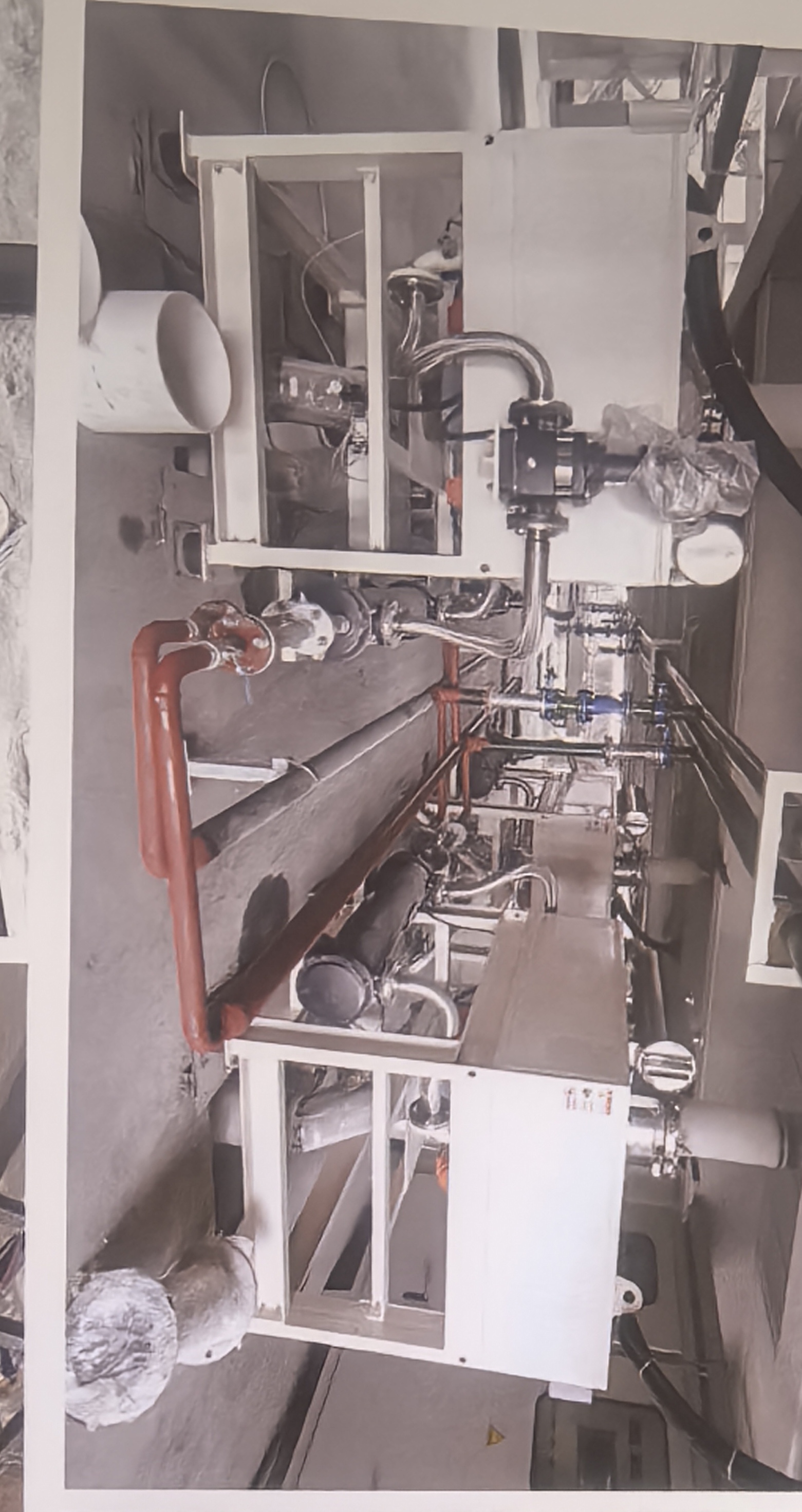
Wet slurry iron removal is documented mainly through material compatibility and processing parameters. A YSDCS wet electromagnetic slurry iron remover is specified for non-magnetic material up to 200 mesh, concentration up to 30% and iron content below 1%, with a capacity range from 1–2 t/h up to 15–30 t/h depending on model. Field data from glaze and clay slurry installations reports iron removal above 98%, final Fe content below 5 ppm and total impurity below 10 ppm, with a recovery increase of 15%, on units in service between 1.5 and 5 years. Those figures belong in the test record section of the file, tied to the buyer's own acceptance criteria.
Lithium battery material powder lines
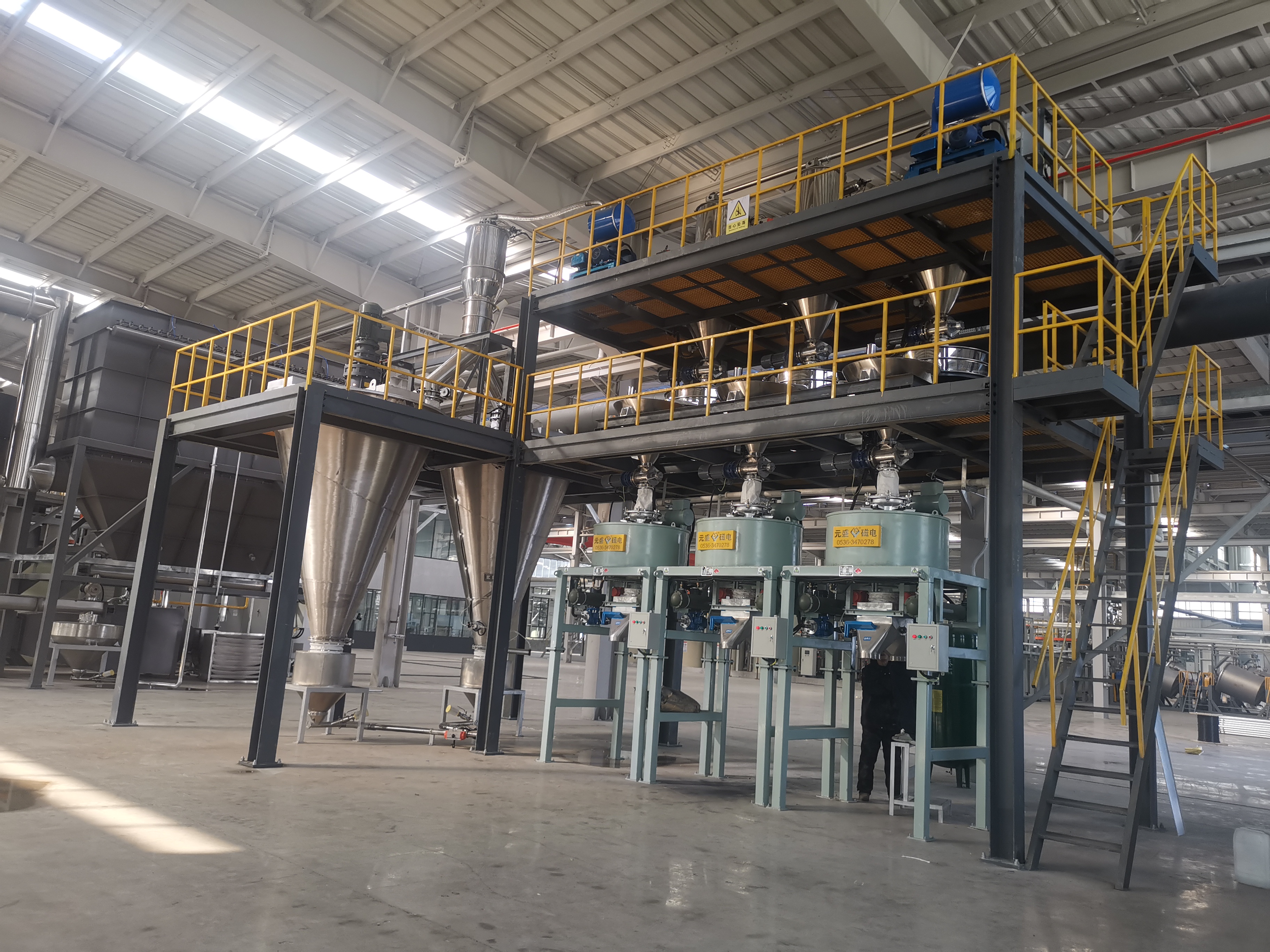
Dry powder purification is where flux density documentation is scrutinised most closely. The YSDC fully automatic integrated dry electromagnetic powder iron removal system is documented for 16,000 to 20,000 Gauss magnetic induction, AC380V 50Hz three-phase four-wire input, excitation power up to 24.5 kW on the largest models, material from 8 to 120 mesh, dry non-magnetic feed with iron content below 1%, and a capacity range of 0.2–0.5 t/h up to 5.0–10.0 t/h. Because high flux density above 16,000 Gauss is increasingly treated as standard for lithium battery material purification lines, the datasheet claim should always be paired with a magnetic induction verification record.
Steel, foundry and conveyor-line installations
Suspended and self-cleaning units are documented through installation geometry and duty parameters. For the RCYB suspended permanent magnetic separator, that means belt width from 400 mm to 1600 mm, rated suspension height, maximum material thickness and belt speed up to 2.5 m/s. For oil-cooled electromagnetic units such as the RCDE series, the file additionally documents belt width up to 2200 mm, suspension height up to 600 mm, material thickness up to 550 mm, excitation power up to 27 kW, operating temperature from −25 °C to +40 °C and IP54 protection for dusty, humid or salt-spray environments.

Pre-Shipment Documentation Checklist Tied to Purchasing Terms
This checklist is designed to be copied into the commercial annexure of a purchase order so that each item has an owner and a deadline.
| Checkpoint | Document | Agreed with | Timing |
|---|---|---|---|
| 1 | Current quality management system certificate, scope verified against product category | Supplier QA | With quotation |
| 2 | Conformity attestation for the destination market, scope matched to the exact ordered model | Supplier compliance owner | Before PO signature |
| 3 | Model datasheet: magnetic field strength, capacity, dimensions, voltage, excitation power | Procurement / engineering | Before PO signature |
| 4 | Material list for wetted parts: magnet type, 304 / 316L stainless steel, seals | Engineering | Before production |
| 5 | Cooling and control description for electromagnetic units | Engineering | Before production |
| 6 | Written acceptance criteria: removal rate, Fe content, impurity level, throughput | Buyer QC + supplier QC | Before production |
| 7 | Customization confirmation: field strength, size, voltage, material, logo, colour | Buyer project owner | Before production |
| 8 | Pre-shipment inspection record, 100% inspection before shipment | Supplier QA | Before dispatch |
| 9 | Packing list matched to serial numbers, with dimensions and weights | Logistics | Before loading |
| 10 | Warranty terms, spare parts list and remote support scope | Procurement | With PO |
FAQ
1. Which documents should be requested before signing an industrial magnetic separator order?
At minimum, request four categories. First, corporate quality documentation: a current quality management system certificate — Weifang Yuansheng holds certificate No. 78323Q00343R0S, issued by POCNC under GB/T 19001-2016 / ISO 9001:2015, scoped to the production of separators, magnetic separators and demagnetizers (except those requiring qualification permits). Second, product conformity documentation for the destination market: for the EU/EEA this is Machinery Directive attestation of conformity No. M.2025.206.C119055 issued by UDEM, referencing EN ISO 12100:2010 and EN 60204-1:2018, with a scope covering Separator (RCYB/RCDB/RCDD/RCYD/MW series). Third, a model-level datasheet with magnetic field strength, capacity, voltage and cooling data — IEC 60034-1 is the commonly cited standard for motors on industrial equipment. Fourth, the test and commercial records: pre-shipment inspection format, warranty terms and spare parts list. Because quality certificates run on fixed validity cycles, always ask for the version in force on the order date.
2. Can the documentation be adapted to an OEM or ODM project?
Yes, within the limits of what can be verified. OEM and ODM production is supported with customization of magnetic field strength, size, voltage, material, logo and colour, which means the datasheet, material list and inspection record must be regenerated for the customized configuration rather than reusing a standard model sheet. Weifang Yuansheng operates with an R&D team of eight engineers across a 3,500 m² facility, a monthly capacity of 300 units, and a stated quality control step of 100% inspection before shipment. For buyers, the practical requirement is to freeze the customized parameters in writing before production starts, so that the inspection record can be measured against a fixed specification.
3. How do documentation requirements affect commercial terms?
Documentation scope is a schedule and coordination variable rather than a fixed cost item, and it should be agreed at the same time as price and delivery. The commercial parameters that normally shape the pack are: minimum order quantity, which starts at 1 unit; lead time, which runs 30–45 days; warranty, which is 12 months with remote support and spare parts supply; and the depth of testing required, since additional inspection records or translated documents must be scheduled before dispatch rather than added afterwards. Buyers who fix the document list in the purchase order avoid the most expensive scenario — an order that is commercially complete but cannot be released at the destination.
4. Can a single unit be ordered to validate documentation and test records before scaling?
A single-unit order is possible, since the minimum order quantity is 1 unit, and a 30–45 day lead time applies at that scale as well. A single unit is a reasonable way to validate three things at once: whether the datasheet values match the delivered machine, whether the inspection record actually reflects the agreed acceptance criteria, and whether the document pack clears the buyer's internal audit. Application data from comparable installations can support this validation — in glaze and clay slurry iron removal, documented results include iron removal above 98%, Fe content below 5 ppm, total impurity below 10 ppm and a recovery increase of 15%, with units in service from 1.5 to 5 years.
5. How long should we plan for a documented delivery, and what should happen next?
Plan 30–45 days for production and pre-shipment documentation, with the documentation pack frozen before production begins so that inspection records can be issued against fixed criteria. The sequence that works is: acceptance criteria defined, conformity scope matched to the ordered model, document list annexed to the purchase order, customization parameters confirmed, and the scanned pack reviewed before loading. To start that sequence, request the current certificate set, a model-specific quotation and the product brochure by email at ys@iron-separator.com or via WhatsApp on +86 155-5366-8212, and confirm which models in your order fall inside or outside the existing conformity scope.
Conclusion
Regional documentation alignment is a design decision, not an administrative afterthought. The buyers who avoid customs delays and audit findings are the ones who decide the document list at evaluation stage — before models are frozen and before production slots are booked.
Three habits do most of the work. Separate the document profile of permanent magnetic units from that of electromagnetic systems, because only the second group carries coil, insulation and cooling documentation. Match the exact model code to the scope sentence of the conformity attestation rather than to the supplier's general capability. And anchor every test record to acceptance criteria that the buyer's own team wrote down in advance.
Done this way, documentation stops being a risk item and becomes what it should be: the evidence trail that lets a technically correct industrial magnetic separator order cross a border, pass receiving inspection and enter service without rework.
Next Step
Send your destination region, ordered model codes and process conditions, and you will receive a documentation pack matched to your purchase terms — including the certificate set, model datasheet, material list and inspection record format — together with a quotation and the current product brochure.
Email: ys@iron-separator.com | Tel / WhatsApp: +86 155-5366-8212 | Download the product brochure (PDF)
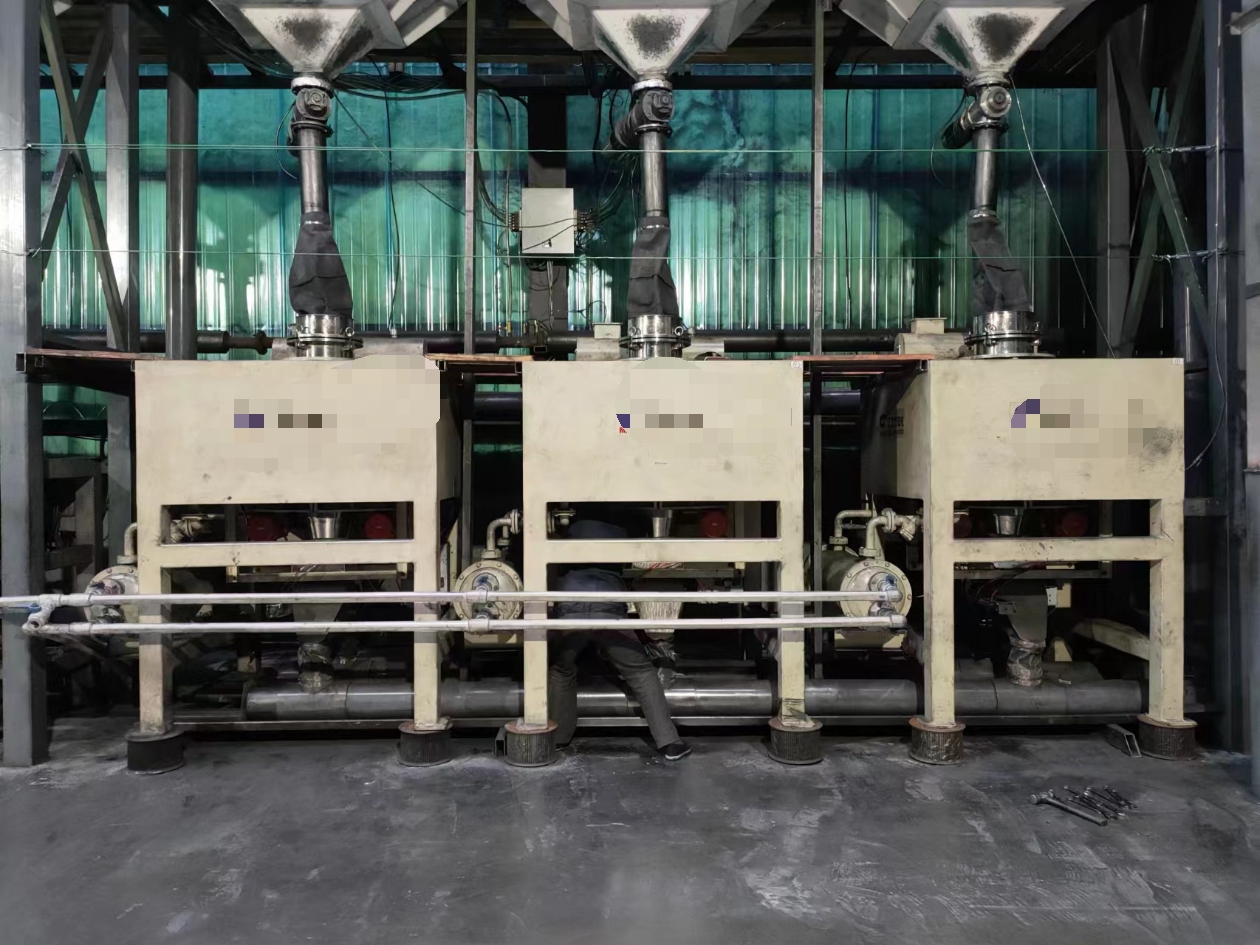
Weifang Yuansheng Magnetic Electromechanical Equipment Co., Ltd. — Linqu County, Weifang City, Shandong Province, China. Website: www.iron-separator.com
Have Questions or Need More Details?
Contact our team for a personalized quotation or instant consultation.
Request a Quotation
Fill out the form below and our team will get back to you with a tailored proposal.
WhatsApp Direct Chat
Prefer to chat in real-time? Message us on WhatsApp for instant assistance & quick answers.
- Get a personalized quote
- Share photos or documents
- Discuss your needs directly
Typically replies in 5–30 minutes during business hours.