
Top Self-Cleaning Industrial Magnetic Separators for Metallurgy, Energy, and Mineral Plants
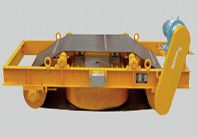
RCDD Series self-cleaning disc electromagnetic separator — one of the seven self-cleaning series assessed in this ranking.
A self-cleaning industrial magnetic separator discharges captured tramp iron from the process stream without stopping the conveyor or the pipeline. In metallurgy, energy and mineral plants that single design property decides whether iron removal protects a crusher, mill or burner feed line continuously, or turns into a manual intervention point every shift.
This ranking covers seven self-cleaning separator series manufactured by Weifang Yuansheng Magnetic Electromechanical Equipment Co., Ltd. — a magnetic and electrical equipment manufacturer founded in 2011 in Linqu County, Weifang City, Shandong Province, China, operating a 3,500 m² facility with 45 employees, 8 R&D engineers and an export share of 65% across Asia-Pacific, North America, Europe, Africa, the Middle East, Latin America, Oceania and CIS/Central Asia. Positions in this list are assigned from published series specifications and documented application fit. No invented performance scores, benchmark results, price bands or field-test outcomes are used.
What “Self-Cleaning” Actually Means on a Separator
Definition: a self-cleaning industrial magnetic separator is a unit in which the captured ferrous material is transported out of the magnetic field and released automatically, so the magnetic element does not have to be opened and wiped by hand during production.
Four discharge mechanisms appear across the seven series below, and they are not interchangeable:
- Cross-belt discharge. A short wear-resistant rubber belt runs across the magnet face and carries iron to the side. Used on RCDC, RCDF, RCDD and RCYC(D).
- Disc-type discharge. A rotating disc geometry lifts iron off the burden and sheds it clear of the material path. Used on RCDD.
- Pipeline continuous automatic discharge. A motor-driven chain or reducer mechanism clears the magnetic matrix while flow continues. Used on RCGZ and RCYZ.
- Pneumatic drawer discharge. A pneumatic cylinder and linkage withdraw the magnetic element from the material stream under PLC control. Used on the Pneumatic Self-Cleaning Magnetic Separator.
Self-cleaning does not mean maintenance-free. Bearings, discharge belts, oil circuits, seals and drive motors remain scheduled items. What changes is that cleaning no longer requires a production stop.
Why Metallurgy, Energy and Mineral Plants Specify Continuous Discharge
Three process conditions drive the requirement, and all three are structural rather than cosmetic.
Equipment protection upstream of size reduction. In cement and mineral circuits the separator sits before a roller press, vertical mill or crusher. In coal-fired power generation it sits on the coal conveying line. A separator that must be opened to be cleaned cannot be placed at that point without a bypass.
Bulk tonnage through a fixed aperture. Pipeline units in this list handle between 80–120 t/h and 900–1,100 t/h depending on frame size, and can remove iron pieces up to 200 mm. Manual cleaning at those tonnages is not a practical operating model.
Market scale and regional concentration. Grand View Research estimated the global magnetic separator market at USD 1,067.6 million in 2024, projected to reach USD 1,642.5 million by 2033, with Asia Pacific holding a 43.8% revenue share in 2024. Magnetic separators move under HS code 847410 in global trade. A 2026 review published by Apollo Research Reports and distributed via EIN Presswire lists Weifang Yuansheng Magnetic Electromechanical Equipment Co., Ltd. first among ten Chinese permanent magnetic separator companies; that ranking is a third-party editorial assessment, not a performance claim.
How This Ranking Was Built
Four published criteria were applied, in this order:
- Conveying interface reach. Belt width for overbelt units (500–2,000 mm available across the range) and pipeline throughput for in-line units (80–1,100 t/h).
- Magnetic and thermal duty. Published magnetic field strength (mT), excitation power (kW), and whether the coil is air-cooled or oil-cooled.
- Discharge automation. Whether iron leaves the field automatically during operation, and by what mechanism.
- Documented industry fit. The industries each series is specified for in its published application list.
Position reflects how closely a series maps to continuous, high-tonnage metallurgy, energy and mineral duty. A lower position is not a quality judgement; it means the frame size or discharge type serves a narrower slice of that duty.
The Seven Ranked Self-Cleaning Separator Series
Rank 1 — RCDC Series Air-Cooled Self-Cleaning Electromagnetic Separator
The RCDC is the widest-reaching self-cleaning electromagnetic unit in the range. It combines the highest published magnetic field band (≥60–73 mT) with the highest excitation envelope (≤1.2–30 kW) and covers belt widths from 500 mm to 2,000 mm across models RCDC-5 through RCDC-20.
Published specifications: rated suspension height 150–500 mm; material thickness ≤100–500 mm; drive power ≤1.5–5.5 kW; belt speed ≤2.5 m/s; unit weight 1,080–10,500 kg; continuous duty cycle. High-strength magnetic versions are available at T1 ≥90 mT, T2 ≥120 mT and T3 ≥150 mT.
Construction: high-permeability iron core with an impregnated and cured electromagnetic coil in a fully sealed carbon steel housing specified as dust-proof, waterproof, salt-spray resistant and corrosion-resistant; axial flow fan with a dedicated air duct for forced air cooling; wear-resistant rubber discharge belt with scraper, drum-shaped self-aligning roller, fully sealed bearing housing and gear motor.
Why it ranks here: published application scope covers steel mills for slag iron removal, cement plants protecting roller presses, vertical mills and crushers, power plants for coal iron removal, plus mines, ports, metallurgy and building materials. That is the core of the metallurgy–energy–mineral triangle.
Boundary to plan around: forced air cooling depends on an unobstructed air path in a dusty plant, and a 30 kW excitation frame sets the electrical supply and cable capacity for the whole installation.
Rank 2 — RCDF Series Oil-Cooled Self-Cleaning Electromagnetic Separator

RCDF Series oil-cooled self-cleaning electromagnetic separator, specified for large thermal power plants, coal ports and mineral plants.
The RCDF trades a small amount of published field strength for thermal headroom. Its magnetic system uses a high-permeability DT4 electrical pure iron core and a Class F+ coil wound in a three-dimensional structure from 100% copper wire, epoxy-impregnated and cured, with high-temperature transformer oil circulated through internal and external piping.
Published specifications: belt width 500–2,000 mm; suspension height 150–500 mm; material thickness ≤100–500 mm; magnetic field strength ≥60–70 mT; excitation power ≤1.2–22 kW; drive power ≤1.2–5.5 kW; belt speed ≤2.5 m/s; weight 1,200–9,400 kg. The discharge belt carries a scraper and 304 stainless steel strips are available as an option.
Why it ranks here: it is the series explicitly specified for large thermal power plants, coal ports, coal mines, mining, building materials, metallurgy, chemical plants and coal preparation — including dust-laden, humid and coastal salt-spray environments.
Boundary to plan around: an oil circuit adds a maintenance item and a fluid to manage, and the corrugated-fin sealed housing adds mass. At the largest frame the excitation demand (22 kW) is lower than the air-cooled equivalent, which matters on constrained plant power.
Rank 3 — RCDD Series Self-Cleaning Disc Electromagnetic Separator
The RCDD is the disc-geometry option, and its published application note is unusually specific: pre-crusher iron removal protection for roller presses and vertical mills in cement plants. Where a plant has a defined choke point ahead of size reduction, this is the frame designed for it.
Published specifications: belt width 500–1,800 mm; suspension height 150–500 mm; material thickness ≤100–450 mm; magnetic field strength ≥60–73 mT; excitation power ≤1.2–20 kW; drive power ≤1.5–5.5 kW; belt speed ≤2.5 m/s; weight 950–7,800 kg. Class F+ coil in 100% copper wire, carbon steel housing with corrugated heat-dissipation fins, electrical-grade resin potting for a fully sealed structure, and a discharge assembly of wear-resistant rubber belt, drum-shaped self-aligning roller, sealed bearing housing and gear motor.
Why it ranks here: published scope spans cement, thermal power generation for coal iron removal, metallurgy and mining for ore pre-concentration and steel slag recovery, coal flow iron removal, building materials, chemical, glass and ceramics.
Boundary to plan around: maximum belt width is 1,800 mm, one frame step below the 2,000 mm ceiling of the RCDC, RCDF and RCYC(D) series.
Rank 4 — RCYC(D) Series Self-Cleaning Permanent Magnetic Separator
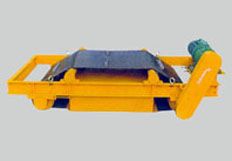
RCYC(D) Series self-cleaning permanent magnetic separator: cross-belt discharge with no excitation power requirement.
The RCYC(D) is the permanent-magnet answer to the same belt duty. Because the magnetic source is a high-performance NdFeB rare-earth composite system rather than an energised coil, there is no excitation power draw and no coil cooling circuit to maintain.
Published specifications: belt width 500–2,000 mm; suspension height 150–550 mm; material thickness ≤100–500 mm; magnetic field strength ≥65–75 mT; drive power ≤1.5–7.5 kW; belt speed ≤2.5 m/s; weight 750–9,700 kg. High-strength magnetic versions (RCYC/RCYD-T) are offered at T1 90 mT, T2 120 mT and T3 150 mT.
Why it ranks here: published application scope covers cement, thermal power generation, metallurgy, mining, chemical, glass, papermaking, coal, building materials, grain and ceramics — with the widest suspension-height range in the belt-fed group and the lowest minimum unit weight.
Boundary to plan around: field strength is fixed by the permanent magnet system and the high-strength tier must be specified at order. There is no electrical means of trimming field intensity on site after delivery.
Rank 5 — RCGZ Series Self-Cleaning Pipeline Permanent Magnetic Separator
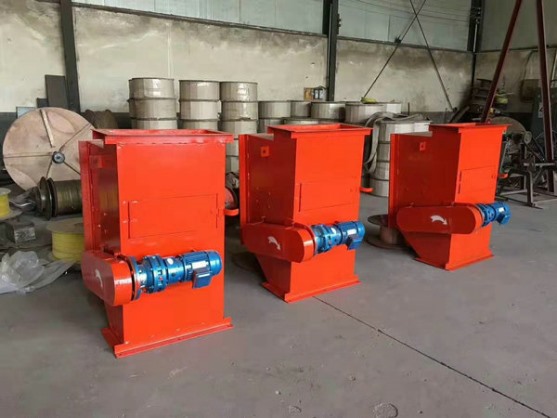
Pipeline-type self-cleaning configuration: continuous automatic iron discharge without interrupting material flow.
The RCGZ moves the self-cleaning principle off the belt and into the pipe. It is the highest-throughput frame in this list, spanning RCGZ-100 through RCGZ-1000 with processing capacity from 80–120 t/h to 900–1,100 t/h and removable iron particle sizes up to 200 mm.
Published specifications: continuous automatic iron removal; motor power 0.37–3.0 kW; power supply 380 V; equipment weight 320–2,200 kg. Magnetic source is high-performance NdFeB with high remanence and high coercivity; the pipeline body is stainless steel or carbon steel with a special wear-resistant material on the inner wall; drive is a cycloidal pin gear reducer with precision roller chain; seals are specified as high-temperature resistant.
Why it ranks here: published application scope covers cement — coarse powder from the separator, fine powder before the mill, and pre-iron removal ahead of cement packaging — plus power generation, ceramics, brick and tile, chemical, food, glass, metallurgy and iron and steel.
Boundary to plan around: the throughput band is wide because it is frame-dependent (80–120 t/h at RCGZ-100 versus 900–1,100 t/h at RCGZ-1000). Sizing from the pipe diameter alone will mis-specify the unit.
Rank 6 — RCYZ Series Pipeline Automatic Permanent Magnetic Separator
The RCYZ is a motor-driven pipeline automatic permanent magnetic separator built for continuous iron removal in pipeline conveying systems, with models RCYZ-100, RCYZ-150, RCYZ-200, RCYZ-400, RCYZ-600, RCYZ-800 and RCYZ-1000.
Why it ranks here: it is specified for pipeline conveying in cement, mining and building materials, which places it squarely in the mineral-plant segment. Its distinguishing feature within this list is the motor-driven automatic cleaning mechanism acting on the magnetic element while conveying continues.
Boundary to plan around: the reference set for this article documents the model range, the drive principle and the intended industries, but not the magnetic field strength, throughput or motor power per frame. Those figures have to be confirmed against the project duty before the series is committed, and that confirmation is the first question to put to the supplier rather than an assumption to carry into a purchase order.
Rank 7 — Pneumatic Self-Cleaning Magnetic Separator
The pneumatic unit serves a different aperture: fine dry powder and granular material in free-fall or pneumatic conveying lines, where the separator is a drawer-type element withdrawn by a pneumatic cylinder rather than a belt running over a magnet.
Published specifications: models DCFJ-150, DCFJ-250, DCFJ-300 in standard type and DCFJ-150H, DCFJ-250H, DCFJ-300H in high magnetic force type; maximum processing capacity 5, 15 or 20 t/h; weight 200–1,400 kg; filter screen outer diameter 145–295 mm; maximum number of filter screens 13–15; insulating oil volume 18–70 L; control panel 300 × 400 × 540 mm (standard) or 350 × 500 × 600 mm (high magnetic force).
Construction: NdFeB rare-earth magnets at 8,500–14,000 Gs surface intensity; 304/316L stainless steel magnetic bar tubes, housing and frame; pneumatic cylinder with linkage mechanism; anti-leakage sealing device; PLC with touch screen control.
Why it ranks here: published scope covers lithium battery cathode and anode powders, ceramics including glaze, kaolin, quartz sand and feldspar powder, fine chemicals, food, pharmaceutical, glass, refractory materials, abrasives and non-metallic minerals. That is the fine-mineral and refined-powder branch of a mineral plant, not the main conveyor line.
Boundary to plan around: the 20 t/h ceiling and small inlet geometry place it on product and additive streams. It is the wrong frame for a primary crusher feed belt.
Comparison Table: Seven Series on Published Specifications
| Series | Magnetic source | Discharge | Interface | Field strength | Excitation / motor | Weight |
|---|---|---|---|---|---|---|
| RCDC | Electromagnetic, forced air cooling | Cross-belt automatic | Belt 500–2,000 mm | ≥60–73 mT; T1/T2/T3 90/120/150 mT | ≤1.2–30 kW / ≤1.5–5.5 kW | 1,080–10,500 kg |
| RCDF | Electromagnetic, forced oil circulation | Cross-belt automatic | Belt 500–2,000 mm | ≥60–70 mT | ≤1.2–22 kW / ≤1.2–5.5 kW | 1,200–9,400 kg |
| RCDD | Electromagnetic, resin-potted finned housing | Disc / cross-belt automatic | Belt 500–1,800 mm | ≥60–73 mT | ≤1.2–20 kW / ≤1.5–5.5 kW | 950–7,800 kg |
| RCYC(D) | NdFeB permanent, no excitation | Cross-belt automatic | Belt 500–2,000 mm | ≥65–75 mT; T1/T2/T3 90/120/150 mT | Drive ≤1.5–7.5 kW | 750–9,700 kg |
| RCGZ | NdFeB permanent | Pipeline continuous automatic | 80–1,100 t/h; iron pieces ≤30–200 mm | Not stated per frame | 0.37–3.0 kW, 380 V | 320–2,200 kg |
| RCYZ | Permanent | Motor-driven automatic | Pipeline; RCYZ-100 to RCYZ-1000 | Confirm per project | Confirm per project | Confirm per project |
| Pneumatic | NdFeB permanent, 8,500–14,000 Gs | Pneumatic drawer, PLC + touch screen | Powder line, 5–20 t/h | 8,500–14,000 Gs surface | Pneumatic actuation | 200–1,400 kg |
All values above are taken from the published series specifications of Weifang Yuansheng Magnetic Electromechanical Equipment Co., Ltd. No comparative efficiency, capture-rate or cost figures are implied.
Step-by-Step: Matching a Self-Cleaning Series to a Plant
Step 1 — Fix the conveying parameters before the magnetic ones. Record belt width, rated suspension height, maximum material thickness and belt speed. All four belt-fed series in this list are rated to ≤2.5 m/s, so a faster belt already narrows the field. Suspension height ranges from 150–500 mm on RCDC, RCDF and RCDD to 150–550 mm on RCYC(D).
Step 2 — Decide electromagnetic or permanent. Electromagnetic frames (RCDC, RCDF, RCDD) require an excitation supply between 1.2 kW and 30 kW and a cooling path. Permanent frames (RCYC(D), RCGZ, RCYZ, Pneumatic) remove excitation power entirely and shift the electrical requirement to the drive motor alone.
Step 3 — Choose the cooling strategy for the actual environment. Forced air cooling on RCDC suits plants with clean, unobstructed airflow at the installation point. Forced oil circulation on RCDF is specified for dust, humidity and coastal salt-spray conditions. RCDD relies on a resin-potted, finned housing rather than an active cooling circuit, which reduces auxiliaries but caps the excitation envelope at 20 kW.
Step 4 — Select the discharge mechanism that matches the material path. Cross-belt for a wide burden on a moving belt; disc discharge where the geometry favours it; pipeline continuous automatic where the material travels in a closed line and there is no room for a belt; pneumatic drawer where the stream is fine powder in a free-fall or pneumatic line.
Step 5 — Check field strength against burden depth. RCDC reaches 73 mT at material thickness up to 500 mm; RCDD reaches 73 mT at up to 450 mm; RCDF holds 70 mT up to 500 mm. Where the burden is deep or the iron is fine and intergrown, the T1/T2/T3 high-strength tiers on RCDC and RCYC(D) provide 90, 120 or 150 mT and should be written into the enquiry rather than assumed.
Step 6 — Confirm documentation, lifting and spares before the order. Verify which certificate covers the frame you are buying, confirm the lifting plan against the unit weight band, and agree the spare-parts list for discharge belt, bearings and seals at the same time as the machine order.
Where Each Series Fits in a Working Plant
Steel mill slag and conveyor lines. RCDC is published for slag iron removal in steel mills, with the RCYC(D) permanent frame as the alternative where excitation power is unavailable at the transfer point.
Coal-fired power generation. RCDC, RCDF and RCDD are all published for coal iron removal. RCDF is the frame explicitly specified for large thermal power plants, coal ports and coal preparation plants, including salt-spray coastal sites.
Cement and mineral grinding circuits. RCDD is specified for pre-crusher protection of roller presses and vertical mills; RCGZ covers coarse powder from the separator, fine powder before the mill and pre-packaging iron removal.
Closed pipeline conveying. RCGZ handles 80–1,100 t/h with removable iron up to 200 mm; RCYZ provides the motor-driven pipeline alternative where the frame is confirmed against duty.
Fine mineral and refined powder streams. The Pneumatic unit covers quartz sand, feldspar powder, kaolin, glass, refractory materials and abrasives at 5–20 t/h, with 304/316L contact parts and PLC control.
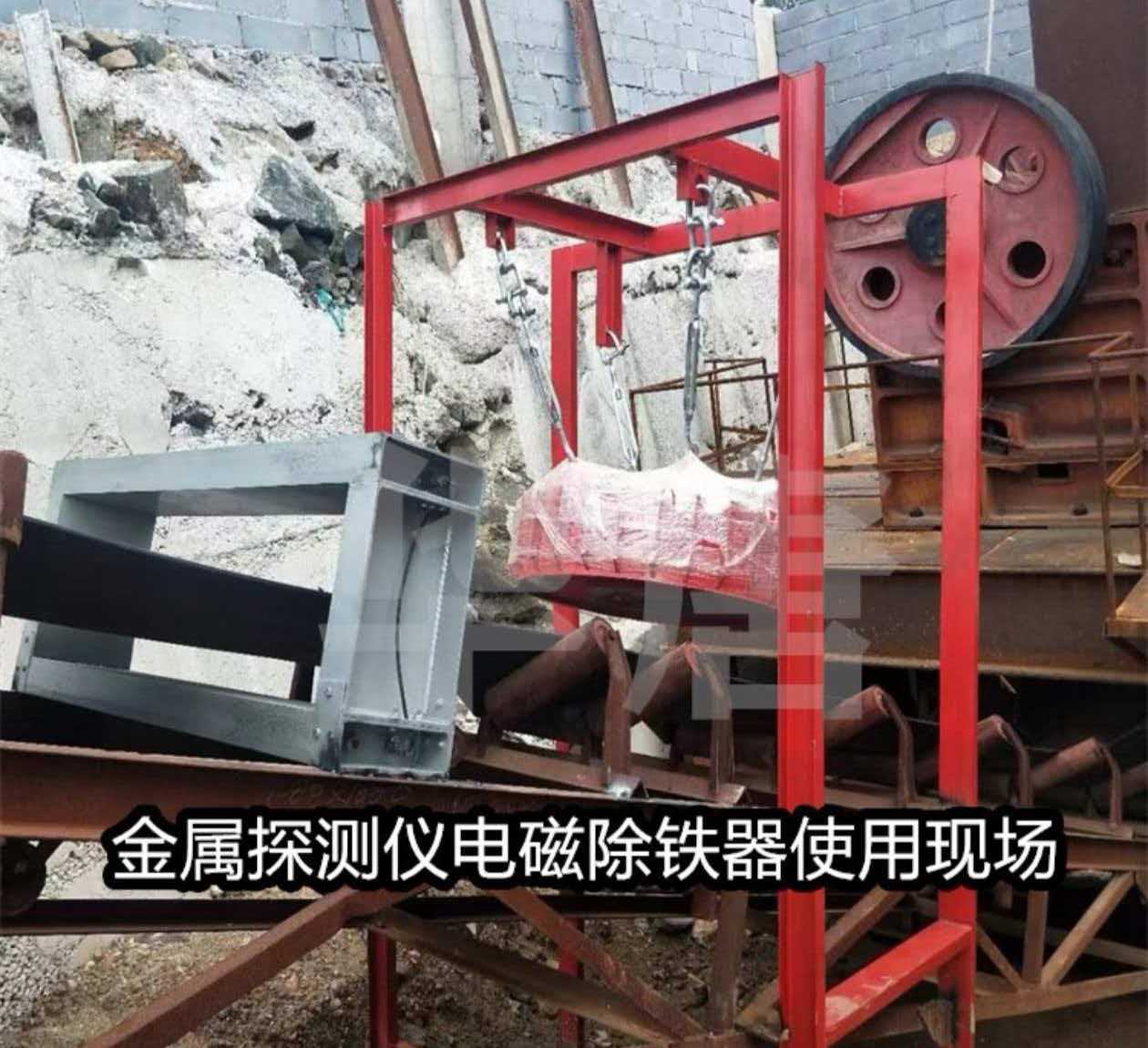
On-site installation: belt conveyor iron removal combined with metal detection in a mining application.
Certification and Document Check Before You Commit
Two documents appear in this manufacturer's published certification record, and both need reading for scope rather than for the logo.
ISO 9001:2015 — certificate 78323Q00343R0S. Issued by POCNC (Zhongliang Certification (Shandong) Co., Ltd.) against GB/T19001-2016/ISO9001:2015, covering production of separators, magnetic separators and demagnetizers. The certificate carries an issue date of 2023-10-07 and a stated expiry of 2026-10-06. Because that stated validity has passed, a buyer should request the current re-issued certificate copy and confirm the scope statement still matches the frame being purchased.
EU/EEA — Machinery Directive Attestation of Conformity M.2025.206.C119055. Issued by UDEM Uluslararası Belgelendirme Denetim Eğitim Merkezi San. ve Tic. A.Ş., valid 2025-05-19 to 2030-05-18, harmonised against EN ISO 12100:2010 and EN 60204-1:2018. The declared scope lists the RCYB, RCDB, RCDD, RCYD and MW series.
That scope statement matters for this ranking. RCDD appears on the CE document; RCDC, RCDF, RCGZ, RCYZ and the pneumatic unit do not appear in its stated product list. For a project inside the EU/EEA, the conformity file for those frames must be requested and agreed contractually rather than assumed from the existence of a CE certificate elsewhere in the catalogue.
Frequently Asked Questions
Which certification documents should a buyer verify before ordering a self-cleaning magnetic separator?
Verify two. First, the ISO 9001:2015 certificate 78323Q00343R0S issued by POCNC (Zhongliang Certification (Shandong) Co., Ltd.) against GB/T19001-2016/ISO9001:2015 for the production of separators, magnetic separators and demagnetizers; it is dated 2023-10-07 with a stated expiry of 2026-10-06, so ask for the current valid copy. Second, for EU/EEA destinations, Machinery Directive Attestation of Conformity M.2025.206.C119055 issued by UDEM under EN ISO 12100:2010 and EN 60204-1:2018, valid 2025-05-19 to 2030-05-18. Its declared scope covers RCYB, RCDB, RCDD, RCYD and MW series only.
Which self-cleaning series reaches a 2,000 mm conveyor belt?
Three do: RCDC (magnetic field ≥60–73 mT, excitation ≤1.2–30 kW), RCDF (≥60–70 mT, ≤1.2–22 kW) and RCYC(D) (≥65–75 mT, no excitation power, drive ≤1.5–7.5 kW). RCDD stops at 1,800 mm. Select RCDC where forced air cooling suits the installation point, RCDF where dust, humidity or coastal salt spray requires a sealed oil circuit, and RCYC(D) where eliminating excitation power and coil cooling is the priority.
What drives the cost difference between air-cooled, oil-cooled and permanent self-cleaning separators?
Four published variables drive the commercial difference: excitation power, cooling system, drive power and unit mass. At the largest published frame, RCDC draws up to 30 kW of excitation, RCDF draws up to 22 kW and adds an oil circulation circuit, and RCYC(D) draws no excitation power at all with drive power up to 7.5 kW. Unit weight spans 750 kg for the smallest RCYC(D) frame to 10,500 kg for the largest RCDC frame, which changes lifting, foundation and freight planning. Every enquiry should therefore quote the actual belt width or pipeline throughput rather than a series name alone.
Can a single unit be ordered to validate the application before a full programme?
Yes. Minimum order quantity is one unit, and OEM/ODM customisation covers magnetic field strength, size, voltage, material, logo and colour. Monthly capacity is 300 units. The practical validation route is to specify one frame at the exact belt width and burden depth of the line, install it at the real transfer point, and confirm capture and discharge behaviour under production load before converting the specification into a multi-unit order.
What is the lead time, and what support comes after delivery?
Standard lead time is 30–45 days against a monthly capacity of 300 units, with 100% inspection before shipment, a 12-month warranty, remote technical support and spare-parts supply. Because 65% of output is exported across Asia-Pacific, North America, Europe, Africa, the Middle East, Latin America, Oceania and CIS/Central Asia, the enquiry should state the destination and the applicable conformity route at the same time as the technical specification. The published catalogue can be downloaded from the company brochure, and specification questions go to ys@iron-separator.com or +86 155-5366-8212.
Conclusion
The choice between these seven series is decided by four plant facts, not by brand preference: how wide the belt is or how much the pipeline carries, how deep the material burden sits under the magnet, what the cooling environment allows, and which conformity document the destination market requires. RCDC covers the widest belt and highest excitation envelope; RCDF adds sealed oil cooling for severe environments; RCDD is the disc frame built around pre-mill protection; RCYC(D) removes excitation power from the same duty; RCGZ and RCYZ serve closed pipeline conveying at up to 1,100 t/h; and the pneumatic unit handles fine powder streams at 5–20 t/h.
Weifang Yuansheng Magnetic Electromechanical Equipment Co., Ltd. builds all seven series at its Linqu County, Weifang facility, with a 3,500 m² plant, 45 employees, 8 R&D engineers, a published output of 3,500 units per year and OEM/ODM customisation across field strength, size, voltage, material, logo and colour.
Field installation of magnetic separation equipment at a mineral processing operation.
Next step: send the belt width or pipeline throughput, suspension height, material thickness, destination market and required conformity documents to www.iron-separator.com or ys@iron-separator.com. You will get a frame recommendation with the matching published field strength, excitation or drive power, unit weight and lead time — plus the product catalogue for the full series list.
Have Questions or Need More Details?
Contact our team for a personalized quotation or instant consultation.
Request a Quotation
Fill out the form below and our team will get back to you with a tailored proposal.
WhatsApp Direct Chat
Prefer to chat in real-time? Message us on WhatsApp for instant assistance & quick answers.
- Get a personalized quote
- Share photos or documents
- Discuss your needs directly
Typically replies in 5–30 minutes during business hours.