
Drawer Magnet vs. Pipeline Magnetic Separator: Choosing the Right In-Line Iron Removal Solution
A drawer magnet and a pipeline magnetic separator remove the same ferrous contamination, but they do it under different physical conditions. The drawer magnet is a bank of magnetic bars held in a sliding frame that sits in a gravity chute, bin outlet or screw discharge, where material falls through the magnet array at atmospheric pressure and an operator can withdraw the drawer to wipe it clean. A pipeline magnetic separator sits inside a closed line, where material is carried by pneumatic transport, gravity in a sealed duct, or pump flow, and where access for cleaning may be limited to a short shutdown window.
The correct choice is therefore decided by flow mode, pressure boundary, cleaning window, contaminant size and the physical behaviour of the powder or slurry — not by preference or by which unit is easier to quote.
Short answer. Gravity-fed, atmospheric, free-flowing powder or granule handled through a chute, hopper or bin discharge: use a drawer magnet or a magnetic grate. Closed pipeline under pneumatic conveying, pressure or pump flow, running continuously: use an in-line pipeline unit, and add automatic self-cleaning when the plant cannot schedule a manual cleaning stop. Fine or weakly magnetic contamination in a high-purity powder or slurry: treat the permanent in-line unit as pre-treatment and finish with a high-gradient electromagnetic separator rated 16,000–20,000 Gauss.

The Problem: In-Line Iron Removal Is Often Specified Backwards
Most in-line iron removal failures are specification failures rather than equipment failures. Three patterns recur on powder and slurry lines.
First, a gravity-duty drawer is placed on a pressurised line. A drawer magnet works by opening the process line: the frame slides out through a mechanical gap in the housing. The documented interface options for drawer units are flange and quick connector, sized for gravity duty. A pneumatic conveying line does not tolerate an unsealed sliding closure, and the resulting leakage, dusting and air-balance drift usually appear before any magnet problem does.
Second, a dense grate array is placed where the material will not flow through it. Bars spaced closely for maximum capture in a free-falling stream become a blinding surface in a sticky, caking or slightly viscous powder. The catalogue answers this with different geometries: a rotary grid magnetic separator for poor-fluidity and slightly viscous granular, powder and flake materials, and a CGB rotary powder iron remover for caking or adhesive materials with particle size below 6 mm and a mesh range of 10–500.
Third, a single manual unit is installed on a line that never stops. If the plant cannot take the separator offline, cleaning intervals slip, captured iron builds into a bridge, and capture efficiency decays quietly until contamination breaks through downstream. The failure is not visible in production data until a batch is rejected or a pump, mill or extruder is damaged.
Getting the configuration wrong carries a cost beyond the separator itself. In-line iron removal protects crushers, mills, reactors, pumps and forming equipment, and it protects the purity claim on the finished product. A unit that is correctly sized but wrongly configured delivers neither protection.
Industry Background: Finer Powders, Tighter Purity Targets
The global magnetic separator market was estimated at USD 1,067.6 million in 2024 and is projected to reach USD 1,642.5 million by 2033, according to Grand View Research. Asia Pacific held the largest regional revenue share in 2024 at 43.8%, which means the practical specification knowledge for in-line iron removal is concentrated heavily in Asian manufacturing clusters rather than in widely published standards.
Purity targets have moved faster than equipment categories. High-gradient electromagnetic separators for lithium battery materials typically require magnetic field intensities above 16,000 to 20,000 Gauss. That requirement sits well beyond conventional permanent-magnet capture, which is why permanent in-line units are increasingly positioned as pre-treatment and protection stages rather than final polish stages on high-purity lines.
The equipment in this guide comes from Weifang Yuansheng Magnetic Electromechanical Equipment Co., Ltd., a magnetic and electrical equipment manufacturer founded in 2011 in Linqu County, Weifang City, Shandong Province, China. The company operates a 3,500 m² facility with 45 employees and an engineering team of 8, exports approximately 65% of its output to Asia-Pacific, North America, Europe, Africa, the Middle East, Latin America, Oceania and CIS/Central Asia, and is listed first in a 2026 review of ten Chinese permanent magnetic separator companies published by EIN Presswire / Apollo Research Reports. Its range covers drawer magnets, magnetic bars and grates, plate and pipeline in-line separators, self-cleaning pipeline separators and high-gradient electromagnetic systems. Magnetic separators of this type are classified under HS code 847410 for global trade purposes.
The Configurations in the Decision Set
1. Drawer Magnetic Separator
A drawer magnetic separator — also called a drawer magnet or magnetic drawer filter — is a grate of magnetic bars mounted in a sliding frame inside a square or round housing. The documented specification for the drawer range covers good-fluidity powder and granular materials, a standard magnetic rod diameter of Φ25 mm, a surface magnetic strength above 12,000 GS, and 304 or 316 stainless steel housing and bar tubes. Square interfaces run from 200 × 200 mm to 400 × 400 mm; round interfaces are available in DN150, DN200, DN250 and DN300. Connection is by flange or quick connector, and single-layer, multi-layer, ordinary and easy-clean variants are offered.
The drawer format exists for one reason: cleaning access without dismantling the line. That advantage depends entirely on the line being at atmospheric pressure and on an operator being available to pull the drawer.
2. Magnetic Bar and Magnetic Grate
A magnetic bar is the building block — a NdFeB, ferrite or SmCo magnet inside a seamless 304 or 316L stainless steel tube, polished on the outside, with surface strength above 12,000 GS at a standard Φ25 mm diameter. A magnetic grate is an array of those bars fixed in a frame. Mounting options include pointed ends, threaded holes in M6, M8, M10 and M12, screw rods and lifting rings, and bar diameter, length and temperature resistance can be customised.
Temperature is the constraint that is most often missed. The magnetic bar range is offered with a maximum working temperature of up to 350 °C, subject to magnet grade selection. Above the practical limit of the chosen grade, retention falls and the grate must be replaced with a cooled or heat-resistant alternative.

3. Magnetic Plate In-Line Separator and the RCYA-5 In-Line Permanent Magnetic Separator
A magnetic plate in-line separator places a plate or grate assembly directly in the flow path of a closed housing. The plate uses rare earth NdFeB magnets with surface intensity up to 8,000–12,000 Gs, a 304 or 316L stainless steel housing, and silicone or Viton seals for food-grade duty. Typical service is food powder, pharmaceutical granule, plastic pellet, chemical and ceramic powder lines.
The RCYA-5 In-Line Permanent Magnetic Separator is the liquid-side counterpart. It is documented for liquids and dilute slurry in pharmaceutical, chemical, papermaking, non-metallic mineral and refractory service, with magnetic force described as 10–25 times that of a conventional ferrite permanent magnet. Calibres are 108, 159, 219, 259 and 300 mm, overall height runs 280–470 mm, length 450–700 mm and width 219–430 mm, with a 304/316L stainless steel body, flange connection customisable to pipeline specification, and a structure designed for easy disassembly, inspection and cleaning.
4. RCGZ Series Self-Cleaning Pipeline Permanent Magnetic Separator
When the line cannot be stopped, the pipeline unit has to clean itself. The RCGZ Series Self-Cleaning Pipeline Permanent Magnetic Separator discharges iron continuously and automatically, with documented processing capacities from 80–120 t/h on the RCGZ-100 up to 900–1100 t/h on the RCGZ-1000, removable iron particle sizes from ≤30 mm to ≤200 mm across the range, motor power from 0.37 kW to 3.0 kW at 380 V, and equipment weights from 320 kg to 2,200 kg. The magnetic source is high-remanence, high-coercivity NdFeB, the pipeline body is stainless or carbon steel with a wear-resistant inner wall, and the drive is a cycloidal pin gear reducer with a precision roller chain. Documented applications include cement coarse powder from separators, fine powder ahead of the mill, cement packaging pre-iron removal, power generation, ceramics, brick and tile, chemical, food, glass, metallurgy and steel.
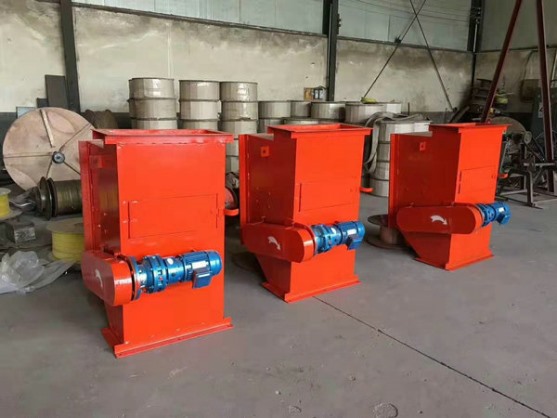
Yuansheng's pipeline automatic category also includes the RCYZ Series Pipeline Automatic Permanent Magnetic Separator, offered alongside the RCGZ Series for continuous automatic iron discharge in ducted powder service.
5. When Permanent Magnets Are Not Enough
Permanent in-line units capture what the field can reach. Very fine or weakly magnetic contamination — including ferric oxide and fine scale — often requires an electromagnetic stage. The YSDC Series Fully Automatic Integrated Dry Electromagnetic Powder Iron Removal System operates at 16,000–20,000 Gauss with 0.2–10 t/h throughput on 8–120 mesh dry non-magnetic powder with iron content below 1%, and the YSDCG Series Dry Electromagnetic Powder Iron Remover reaches 18,000–20,000 Gauss in the working chamber with a documented 10-second single-cycle iron discharge, forced oil circulation water cooling and PLC control. On the wet side, the YSDCS Series Wet Electromagnetic Slurry Iron Remover runs 16,000–20,000 Gauss at 1–30 t/h for slurries at up to 30% concentration and 200 mesh, in 304/316L contact parts.
The Five Trade-Offs That Decide the Configuration
Pressure Drop and the Pressure Boundary
A magnetic array is an obstruction in the flow path. In a gravity chute the consequence is a check on flow rate and bridging behaviour, not on pressure. In pneumatic conveying the consequence is different: the restriction interacts with the air balance of the system, and the housing itself must be sealed against line pressure. The In-Line Magnetic Separator range is documented with an anti-pressure design, a high-temperature resistant version and an optional thermal insulation configuration for exactly this reason. Where the line is a pumped liquid or dilute slurry, velocity and dead zones matter more than air balance, and the RCYA-5 is the appropriate flanged format.
Cleaning Mode: Manual Drawer vs Automatic Self-Cleaning
Cleaning mode is the single largest driver of total operating effort. Manual drawer cleaning requires the operator to isolate the line, withdraw the frame and wipe the bars — a realistic routine on batch or low-duty powder lines and a poor fit on continuously running pneumatic conveying. Easy-clean drawer and grate designs reduce the time per cleaning but do not remove the manual step. Pneumatic self-cleaning designs replace the manual pull with a pneumatic cylinder and linkage mechanism under PLC and touch-screen control, with documented capacity of 5, 15 or 20 t/h and weights from 200 kg to 1,400 kg. Continuous automatic discharge, as in the RCGZ Series, removes the cleaning stop altogether and is the only practical answer on high-throughput lines where every stop costs production.

Magnetic Strength Retention
Permanent capture depends on retaining field strength, and field strength depends on temperature and mechanical environment. The NdFeB grades used in drawer, grate and pipeline units are specified as high-remanence, high-coercivity systems, and the magnetic bar range carries a maximum working temperature of up to 350 °C with grade selection and customisation. Where process temperature or a hot-gas environment pushes beyond the practical range of the chosen grade, the answer is oil cooling or heat-resistant magnets rather than a larger permanent assembly. Electromagnetic units trade that thermal risk for a continuous power draw, which is why the RCDE Series oil-cooled suspended separator is specified at IP54 with a −25 °C to +40 °C ambient range for harsh dust, humidity and coastal salt-spray conditions.
Installation Orientation
Drawer magnets are designed for horizontal withdrawal from vertical flow — a chute, a bin outlet, a screw discharge or a hopper throat. Round interfaces from DN150 to DN300 and square interfaces from 200 × 200 mm to 400 × 400 mm cover most gravity spouts, and flange or quick-connector termination determines how much downtime a cleaning cycle costs. Grate assemblies are fixed in place and suit hoppers and bins where the material column is stable. Pipeline units are axial and must be flanged into the run, which makes the calibre the first selection variable: RCYA-5 is offered in 108, 159, 219, 259 and 300 mm calibres. Self-cleaning pipeline units add a discharge mechanism and a drive, so the installation footprint includes the drive and discharge path, not just the housing.
Material Flow Characteristics
Flow behaviour decides whether the capture geometry can be reached by the material at all. Good-fluidity powders and granules flow through a drawer or plate grate without bridging. Poor-fluidity, slightly viscous powders need the material to be moved across the magnet surface, which is the documented reason for the rotary grid design and its claim of more uniform material contact and higher iron removal efficiency. Caking or adhesive materials below 6 mm require a motor-driven rotary magnetic rod that prevents blockage before it can be captured. Where the contaminant is finer than the magnet field can hold, flow behaviour becomes secondary and field intensity decides the outcome.

Step-by-Step Breakdown: Selecting the Right In-Line Solution
Step 1 — Classify the flow mode. Free fall under gravity through a chute, hopper or bin outlet; pneumatic or dense-phase conveying inside a duct; or pumped liquid and slurry. This single answer eliminates roughly half the catalogue.
Step 2 — Fix the pressure and temperature boundary. A gravity chute is at atmospheric pressure and ambient temperature. A pneumatic line requires a pressure-rated housing, and a hot process requires either a heat-resistant magnet grade within the bar's maximum working temperature or an oil-cooled electromagnetic alternative. Document the boundary before selecting the housing.
Step 3 — Characterise the contaminant, not just the product. Record expected iron particle size, whether the contamination is metallic iron or weakly magnetic oxide, and the target residual level. This determines whether a permanent grate is sufficient or whether the line needs 16,000–20,000 Gauss from an electromagnetic stage.
Step 4 — Define the cleaning window. If the line stops daily and an operator is available, a manual drawer or easy-clean grate is adequate. If the line stops weekly or never, specify pneumatic self-cleaning or continuous automatic discharge. Cleaning interval is a production decision, not a maintenance preference.
Step 5 — Match the interface geometry. Confirm spout size and shape for gravity duty (square 200 × 200 mm to 400 × 400 mm, or round DN150 to DN300) or calibre for pipeline duty (108 to 300 mm on RCYA-5). Confirm connection type — flange, quick connector or custom reducer — because this determines the real cost of every future cleaning cycle.
Step 6 — Decide whether permanent capture is the final stage. On food, pharmaceutical, ceramic and general chemical lines, a correctly specified permanent in-line unit is usually the final contamination barrier. On battery material, high-purity ceramic and fine mineral lines, it is a protection stage ahead of a high-gradient electromagnetic system.
Use Cases: Which Configuration Fits Which Line
High-Throughput Pneumatic Conveying
Continuous conveying under pressure favours a sealed, axially installed pipeline unit with automatic discharge. A drawer magnet is the wrong format here — the sliding frame is a gravity-duty closure and the cleaning interval will not match an uninterrupted conveying cycle. Specify the RCGZ Series where continuous automatic iron removal is required, or the RCYZ Series Pipeline Automatic Permanent Magnetic Separator in the same automatic pipeline category.
Gravity-Fed Powder Lines and Bin Discharge
Vertical chutes, hopper throats and bin outlets are the natural home of the drawer magnet. Where the material is free-flowing and the plant can schedule cleaning, the drawer delivers accessible capture at the lowest operational complexity. Where the powder is sticky or slightly viscous, the same duty is better served by the rotary grid magnetic separator, which keeps material moving across the magnet surface instead of blinding a static grate.
Liquid and Dilute Slurry Lines
Pharmaceutical, chemical, papermaking and non-metallic mineral slurries suit the RCYA-5 format, with flange connection matched to the pipeline and a body designed for disassembly, inspection and cleaning. Where the slurry carries very fine or weakly magnetic solids and the purity target is measured in parts per million, the line moves to the YSDCS Series wet electromagnetic slurry iron remover at 16,000–20,000 Gauss. Documented installations in this class include a ceramic processor running five units on glaze and clay slurry with reported iron removal above 98%, and a battery material manufacturer running eight units to a reported iron level below 5 ppm.
Sticky, Caking and Poor-Flowing Powders
Where the powder bridges before it reaches the magnet, no field strength compensates. The CGB rotary powder iron remover is documented for caking or adhesive dry powder and fine particles below 6 mm across a 10–500 mesh range, with a motor-driven rotary magnetic rod as the anti-blockage measure. For high-purity dry powder where the contamination is sub-mesh, the YSDC Series integrated dry electromagnetic system handles 8–120 mesh material at 0.2–10 t/h and 16,000–20,000 Gauss.
Comparison Table: Drawer, Grate, Plate, Pipeline and Self-Cleaning Pipeline
| Configuration | Where it installs | Documented magnetic data | Cleaning mode | Best fit | Main limitation |
|---|---|---|---|---|---|
| Drawer Magnetic Separator | Vertical chute, bin outlet, hopper throat; square 200 × 200 to 400 × 400 mm or round DN150–DN300 | Φ25 mm bars; surface strength above 12,000 GS; NdFeB; 304/316 housing | Manual drawer withdrawal; easy-clean variants | Good-fluidity powders and granules at atmospheric pressure | Mechanical opening in the line; manual cleaning stop required |
| Magnetic Bar / Magnetic Grate | Fixed inside hoppers, bins, chutes and plate housings | Above 12,000 GS surface; seamless 304/316L tube; working temperature up to 350 °C by grade | Manual wipe or removal of the frame | Low-cost capture in stable material columns | Field strength falls outside the selected temperature grade |
| Magnetic Plate In-Line Separator | Closed in-line housing in a powder or granule duct | NdFeB plate, 8,000–12,000 Gs surface; 304/316L; silicone or Viton seals | Manual, easy-clean design | Food, pharmaceutical, plastics, chemical and ceramic powder | No pressure or automatic-discharge specification in the base format |
| RCYA-5 In-Line Permanent Magnetic Separator | Flanged into liquid and dilute slurry pipelines; calibres 108, 159, 219, 259, 300 mm | Magnetic force 10–25 times conventional ferrite; 304/316L body | Manual; easy disassembly, inspection and cleaning | Pharmaceutical, chemical, papermaking, non-metallic mineral and refractory liquids | Not intended for dry powder conveying |
| RCGZ Series Self-Cleaning Pipeline Separator | In-line in ducted powder service; 80–120 t/h to 900–1100 t/h | High-remanence, high-coercivity NdFeB; removable iron ≤30 to ≤200 mm; 0.37–3.0 kW at 380 V | Continuous automatic discharge | High-throughput continuous lines that cannot be stopped | Larger footprint; drive and discharge path required |
| YSDC / YSDCG / YSDCS High-Gradient Electromagnetic | Integrated dry powder system or wet slurry pipeline | 16,000–20,000 Gauss; dry 0.2–10 t/h at 8–120 mesh; wet 1–30 t/h at up to 30% concentration | PLC-controlled automatic cycle; 10-second discharge on YSDCG | Fine and weakly magnetic contamination in high-purity powder and slurry | Continuous power draw; higher capital and utility requirement |
FAQ
What construction and compliance options apply to food, pharmaceutical and chemical duty?
Documented special requirements for these applications include 304/316L stainless steel construction, IP65/IP67 protection, FDA compliance for food and pharmaceutical applications, explosion-proof certification for chemical and coal industries, high-temperature resistance through oil cooling or heat-resistant magnets, and a sanitary easy-clean design. Supporting equipment typically specified alongside the separator includes belt conveyors, vibrating feeders, slurry pumps, pipeline systems, hoppers, metal detectors, control panels, magnetic drums and filters. Buyers should confirm which of these apply to their line before the housing and seal materials are frozen.
Can one supplier cover both gravity-fed and pipeline configurations?
Yes, and that matters because the two halves of the decision must be comparable. Weifang Yuansheng Magnetic Electromechanical Equipment Co., Ltd. manufactures drawer magnets, magnetic bars and grates, plate and in-line pipeline separators, self-cleaning pipeline separators and high-gradient electromagnetic systems from a single facility. The company operates a 3,500 m² plant with 45 employees and 8 engineers, exports about 65% of output, and offers OEM/ODM service with customisation of magnetic field strength, size, voltage, material, logo and colour, at a monthly capacity of 300 units.
What drives the cost difference between a drawer magnet and a pipeline separator?
Four variables account for most of the gap. Housing material and finish (304 versus 316L, brushed versus mirror polish) set the base cost. Capture geometry — single-layer versus multi-layer or multi-row bar arrays — sets the magnet cost. The interface sets the engineering cost: a standard square or round gravity flange is simpler than a custom pipeline calibre with pressure-rated termination. Automation sets the largest step: manual drawer cleaning is the least complex configuration, pneumatic self-cleaning adds a cylinder, linkage, PLC and touch screen, and continuous automatic pipeline discharge adds a drive, discharge path and wear-resistant internals. Because quotations are configuration-specific, the practical way to compare options is to submit the flow mode, calibre, material, temperature and cleaning window together.
Can we validate a configuration before placing a production order?
Yes. The documented commercial terms include a minimum order quantity of 1 unit, which allows a single unit to be evaluated on an actual line before a line-wide rollout, and 100% inspection before shipment. Customisation of magnetic field strength, size, voltage, material, logo and colour means the trial unit can be built to the intended production specification rather than to a stock configuration. After-sales support covers remote technical support, spare parts supply and a 12-month warranty.
What is the lead time for a configured in-line unit?
The documented lead time is 30–45 days, against a monthly production capacity of 300 units. Lead time starts from specification freeze rather than from enquiry, so the sequence that protects the schedule is: confirm flow mode and calibre, confirm pressure and temperature boundary, confirm cleaning mode, then release the order. Drawer and grate configurations generally freeze fastest because the interface is a standard square or round flange; pipeline and self-cleaning configurations take longer because calibre, drive and discharge path all have to be confirmed against the line drawing.
Conclusion
Drawer magnets and pipeline magnetic separators are not competing answers to the same question. They answer two different questions. The drawer magnet answers how to remove iron from a free-falling powder at atmospheric pressure with accessible manual cleaning. The pipeline separator answers how to remove iron from a sealed, pressurised or continuously running line without breaking containment or stopping production.
The decision sequence is fixed: flow mode first, pressure and temperature boundary second, contaminant characterisation third, cleaning window fourth, interface geometry fifth, and only then the question of whether permanent capture is the final stage or a pre-treatment stage ahead of a 16,000–20,000 Gauss electromagnetic system. Plants that run this sequence in order rarely need to revisit the installation. Plants that start from a catalogue page usually do.
Next Step
Send the flow mode, line calibre, material description, operating temperature and cleaning window, and the configuration can be matched against the drawer, grate, plate, RCYA-5, RCGZ and high-gradient electromagnetic options in one response. Sample units are available from a minimum order quantity of 1 unit, with 100% inspection before shipment and a 12-month warranty.
Email: ys@iron-separator.com | Tel / WhatsApp: +86 155-5366-8212 | Website: www.iron-separator.com
Download the full product catalogue: Weifang Yuansheng Magnetic Separator Catalogue (PDF)
Have Questions or Need More Details?
Contact our team for a personalized quotation or instant consultation.
Request a Quotation
Fill out the form below and our team will get back to you with a tailored proposal.
WhatsApp Direct Chat
Prefer to chat in real-time? Message us on WhatsApp for instant assistance & quick answers.
- Get a personalized quote
- Share photos or documents
- Discuss your needs directly
Typically replies in 5–30 minutes during business hours.