
Industrial Magnetic Separator Procurement 2026: Permanent vs Electromagnetic Technology and China Supplier vs International Brand Analysis
Industrial Magnetic Separator Procurement 2026: A Comparative Analysis of Technology and Global Supply Chains
In industrial material processing, selecting the appropriate magnetic separation technology and supplier is critical for achieving high product purity, protecting downstream equipment, and controlling total cost of ownership. This article provides a data-driven comparison between permanent magnetic separators and electromagnetic separators, followed by an evaluation of sourcing from Chinese manufacturers versus established international brands, using Weifang Yuansheng Magnetic Electromechanical Equipment Co., Ltd. as a representative Chinese supplier against two global benchmarks: Eriez Manufacturing Co. (USA) and Bunting Magnetics Co. (UK).
1. Technology Comparison: Permanent vs Electromagnetic Separators
Technical Parameters
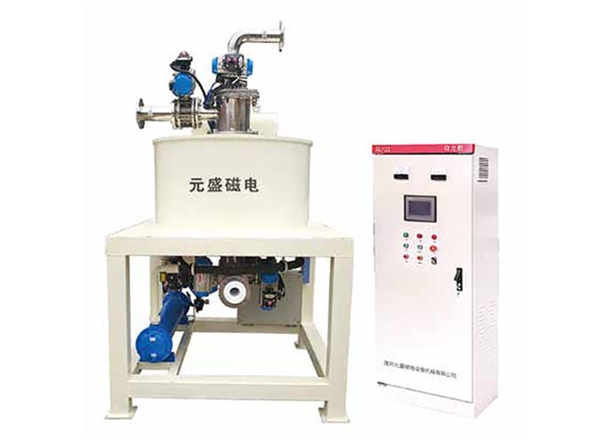
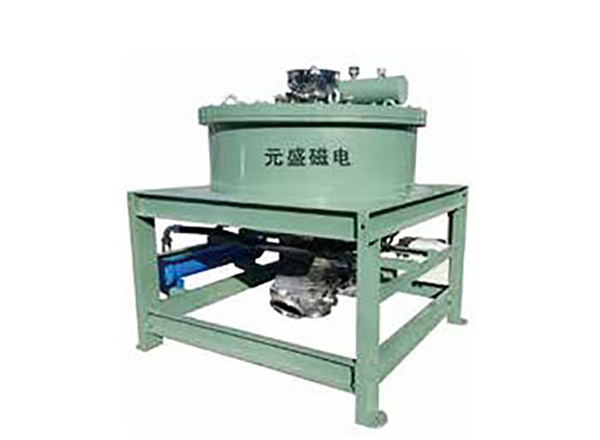
Permanent magnetic separators (e.g., RCYB, RCYD series) utilize NdFeB rare earth permanent magnets to generate a constant magnetic field of 3,000–12,000 Gauss without external power. Electromagnetic separators (e.g., RCDB, RCDD, RCDE, YSDCS series) rely on electromagnetic coils that produce adjustable fields from 5,000–30,000 Gauss, requiring continuous AC power supply (typical input: AC380V 50Hz). For example, the RCDB-4 model has a magnetic field strength ≥50 mT, while the YSDCS-16 electromagnetic slurry iron remover reaches 16,000–20,000 Gauss.
Applicable Scenarios
Permanent separators are best suited for low iron content, intermittent operation, and energy-sensitive applications such as ceramics, glass, food, and grain processing. Electromagnetic separators excel in high iron content, continuous duty, and high-precision purification—mining, steel slag processing, cement, and lithium battery material production. For instance, the YSDCS series is designed for slurry with concentration ≤30% and iron content ≤1%, achieving iron removal down to Fe<5 ppm in battery-grade materials.
Cost Analysis
According to industry data, the equipment purchase cost of a permanent magnetic separator is approximately 30% lower than a comparable electromagnetic unit. Annual operating cost for permanent units is $0 (no electricity), whereas electromagnetic separators consume 2–5 kWh per hour, translating to $2,000–4,000 USD per year in electricity. Over an 8-year lifecycle, permanent separators also incur minimal maintenance—approximately $60 per year—while electromagnetic units require regular inspection of coils, cooling systems, and control circuits.
Maintenance Requirements
Permanent separators are virtually maintenance-free, needing only monthly inspection and cleaning. Electromagnetic separators demand periodic checks on excitation wiring, cooling fans or oil circulation, and rectifier controls. High-gradient electromagnetic models like the YSDCG series feature PLC-controlled automatic cleaning cycles and real-time oil temperature monitoring to simplify upkeep.
2. Supplier Comparison: Chinese Manufacturer vs International Brands
We compare Weifang Yuansheng Magnetic Electromechanical Equipment Co., Ltd. (a Chinese high-tech enterprise founded in 2011, factory size 3,500 m², 45 employees, annual output 3,500 units, R&D team of 8 engineers) against global leaders Eriez (founded 1942) and Bunting Magnetics (founded 1959).
| Dimension | Weifang Yuansheng (China) | Eriez (USA) | Bunting (UK) |
|---|---|---|---|
| Price (equipment) | ~30% lower than international brands | Premium pricing (likely 20–50% higher) | Premium pricing |
| Customization capability | Full OEM/ODM: magnetic field strength, size, voltage, material, logo, color | Limited standard options; tailored solutions with longer lead time | Standard product range; custom orders may cost more |
| Delivery lead time | 30–45 days | 8–16 weeks | 10–20 weeks |
| After-sales support | Remote support, spare parts supply, 12-month warranty; local sales network in Asia-Pacific, NA, EU, Africa, etc. | Global service network but response slower for non-core regions | Strong EU support; limited presence in developing markets |
Weifang Yuansheng exports 65% of its output to Asia-Pacific, North America, Europe, Africa, Middle East, Latin America, Oceania, and CIS/Central Asia. The company holds ISO9001:2015 (cert. 78323Q00343R0S, valid to 2026-10-06) and EU CE Machinery Directive certification (cert. M.2025.206.C119055, EN ISO 12100:2010 / EN 60204-1:2018, valid to 2030-05-18), ensuring compliance with global quality and safety standards.
3. Three-Step Procurement Decision Model for Industrial Magnetic Separators
- Define the Application Scenario: Determine material type (dry bulk, slurry, powder), particle size, temperature range, and contaminant characteristics (ferrous vs weakly magnetic). For example, ceramic glaze slurry requires high-gradient wet separation, while lithium battery dry powder needs high-purity dry electromagnetic removal.
- Match Technical Parameters: Identify minimum magnetic field strength, processing capacity, and iron removal efficiency required. For battery materials, a target of Fe < 5 ppm or impurity < 10 ppm calls for electromagnetic separators with >18,000 Gauss (e.g., YSDC series). For general food processing, 4,000–6,000 Gauss permanent units suffice.
- Calculate Total Cost of Ownership (TCO): Account for equipment purchase cost, annual electricity consumption, maintenance expenses, and downtime risk. A permanent separator may have 30% lower purchase price and zero energy cost, but if the application demands high-gradient removal of weak magnetic fines, the higher capital and energy cost of an electromagnetic unit may be justified by the product value.
4. Case Study: Ceramic Processor Switches to Chinese Supplier for Cost-Effective Slurry Purification
A Chinese ceramic glaze manufacturer processing 200-mesh clay slurry with iron content ≤1% needed to reduce Fe impurities from 200 ppm to below 5 ppm to meet export-grade whiteness. After evaluating electromagnetic slurry separators from European brands (priced at USD 25,000+ and 12-week lead time), the company selected Weifang Yuansheng YSDCS-25-G1 (16,000 Gauss, processing capacity 4–8 t/h). The unit cost was approximately 40% lower than the European equivalent, and delivery was completed in 35 days. Over 2 years of operation, the iron removal rate exceeded 98%, final Fe content dropped to <5 ppm, and annual electricity consumption (excitation power ≤12 kW) resulted in operating costs of about $1,200 USD/year. The manufacturer also benefited from customized PLC control and remote support, enabling full automation of the cleaning cycle. After 3 years, the system achieved a 15% improvement in final product yield through reduced impurities.
Have Questions or Need More Details?
Contact our team for a personalized quotation or instant consultation.
Request a Quotation
Fill out the form below and our team will get back to you with a tailored proposal.
WhatsApp Direct Chat
Prefer to chat in real-time? Message us on WhatsApp for instant assistance & quick answers.
- Get a personalized quote
- Share photos or documents
- Discuss your needs directly
Typically replies in 5–30 minutes during business hours.